

Want to see some YouTube Shorts ads that are scaling right now, using VidTao ad intelligence software ?
You’re in luck…
Because today is 2 Shorts Tuesday. Why YouTube Shorts ads?
Because YouTube Shorts ad inventory is only going to keep growing:
5 Reasons Why More Creators Are Choosing YouTube Shorts Instead of TikTok
#1 -  MORE MONEY
YouTube made it easier to earn money with YouTube Shorts in 2024 by letting creators take a cut of ad money from their Shorts—a better deal than TikTok’s confusing payment system.
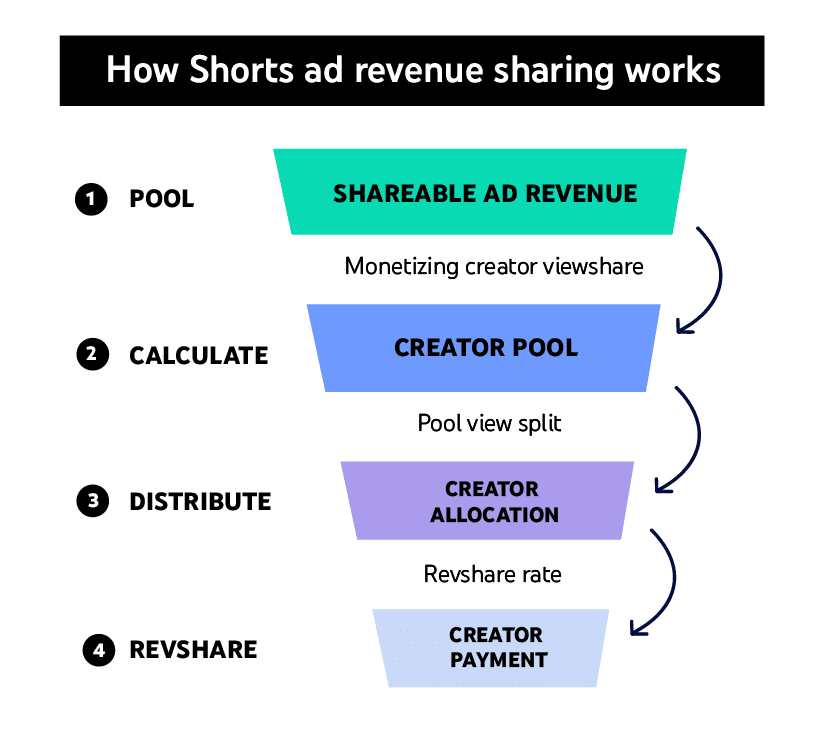
Image source: Google
This works for both short videos and regular YouTube content, making it safer for creators who want steady income.
#2 -  TikTok Ban Rumors/Reality
Rumors (and a quick reality) of a TikTok ban in the U.S. made many creators start posting on YouTube Shorts just in case. YouTube even let Shorts videos be 3 minutes long starting October 2024, copying TikTok’s style while giving creators more flexibility.
YouTube’s Big Advantages
#3 -  Built-in audience
Shorts get boosted by YouTube’s recommendations and trending lists, helping creators grow faster. TikTok doesn’t connect as well to other apps or longer videos.
#4 -  Different viewers
YouTube’s users are often older (25-34) vs. TikTok’s teen-heavy crowd, so creators can reach new fans.
#5 -  Creators Are Fed Up With TikTok
Many say TikTok’s rules change too often, and they’re tired of worrying about bans. YouTube feels more stable, especially with Google’s support for targeting the right audiences. The 3-minute Shorts also let them tell better stories without switching apps.
...And critically, most DTC & Direct Response advertisers are still under-leveraging YouTube Shorts as an ad placement.
(and the upside is huge)
So, what are some ways you can succeed with YouTube Shorts ads?
Let’s take a closer look at 2 YouTube Shorts ads doing well right now:
 Ad 1: Away luggage ad (Creator UGC, identity-first hook)
Our first ad pick for this week sells a simple product - a suitcase.
The ad opens with a guy on an airport escalator, teal Away suitcase rolling beside him. He looks straight at camera and says:
"I'm an overpacker. But I refuse to check a bag."
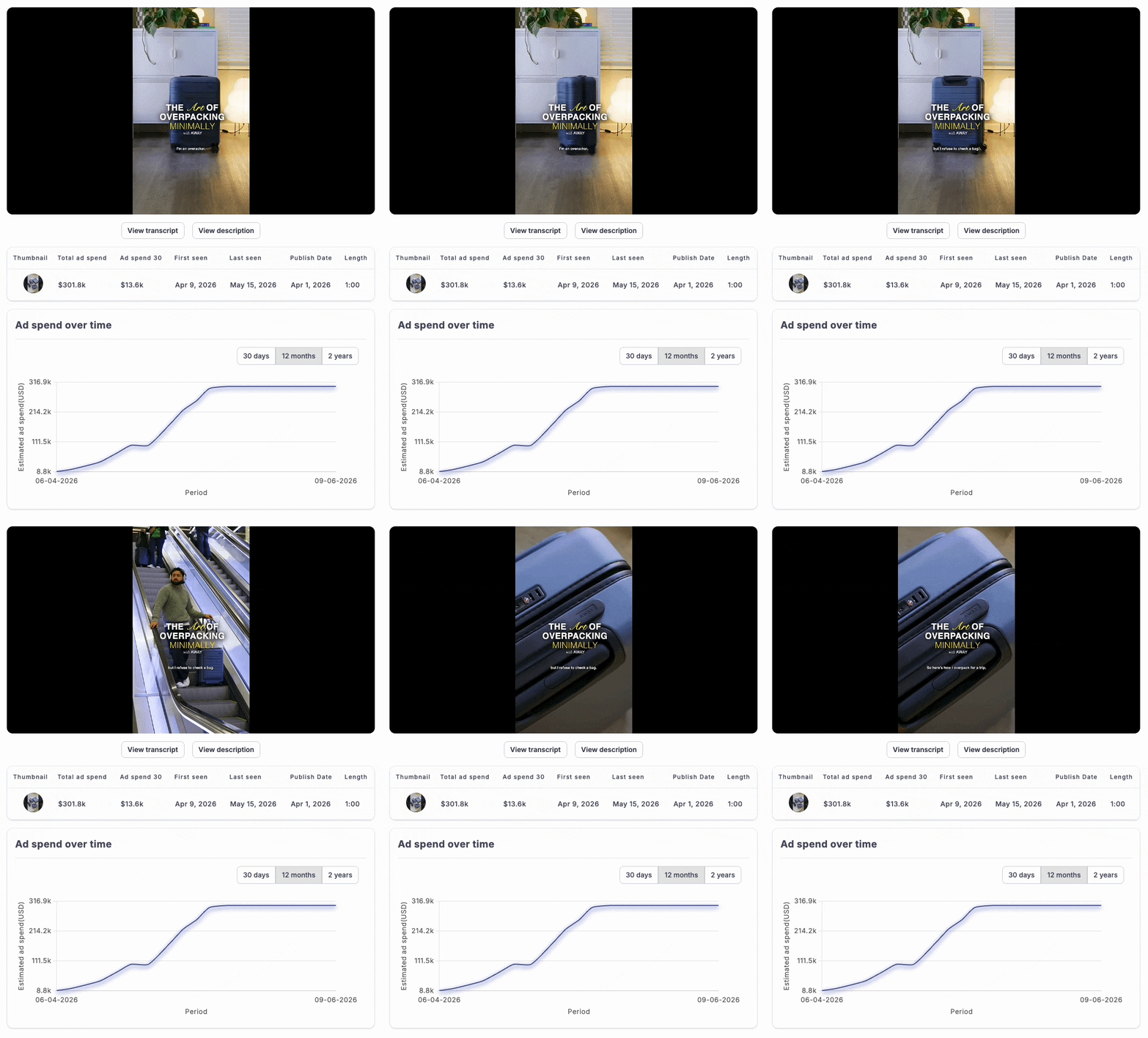
That's the whole brief. Two sentences, a contradiction, and a personality type millions of travellers immediately recognise in themselves. He's not promising a solution to a problem. He's naming an identity, and then showing how he lives inside it without compromise.
From there it's a clean product walkthrough. The Away Executive Bigger Carry-On: durable shell, lightweight, TSA-approved combination lock, built-in compression system that squeezes in a few more outfits. Exterior pocket for laptop and earbuds.
Then the compression packing cubes - packs everything you want to bring, compresses it down to what you're actually allowed to bring.
Then the Everywhere Bag: spacious main compartment, padded laptop sleeve, water bottle pocket, trolley sleeve to secure onto the suitcase, removable shoulder strap that doubles as a gym bag, and water repellent. He closes with the bundle offer - save up to $50 stacking suitcase and bag, more if you're grabbing multiple cases.
No dramatic music. No problem-agitation. Just a person who travels a lot, talking about gear he clearly uses, in an airport.
Why this ad works:
 "I'm an overpacker but I refuse to check a bag" is an identity hook, not a problem hook. Most luggage ads open with a pain - lost luggage, airport chaos, bag fees. This one opens with a personality trait the viewer either shares or knows well. The contradiction ("overpacker who won't check a bag") creates instant intrigue because it sounds impossible, and the whole ad is the proof that it isn't. You're not being sold a suitcase. You're being shown how someone like you travels smarter.
 The three-product walkthrough is structured as a system, not a shopping list. Suitcase → packing cubes → everywhere bag. Each one solves a different layer of the same problem: fit more, organise what you fit, carry the overflow. Presenting them as a linked system makes the bundle feel logical rather than upsold. You don't feel like you're being sold more - you feel like the full solution requires all three.
 Shooting in an actual airport gives the product context that a studio never could. The escalator, the departure lounge, the carry-on rolling behind him - the viewer sees the product in use in the exact situation they'll use it. It collapses the gap between ad and reality. No imagination required.
 Every feature mentioned solves a specific carry-on traveller frustration. Compression system = more outfits without checking. Exterior laptop pocket = no digging through the main compartment at security. Trolley sleeve = hands-free in the terminal. These aren't spec sheet bullets - they're solutions to things the frequent traveller has cursed at before. The specificity is what makes it land.
- The bundle offer closes without pressure. "Save up to $50 or more if you're grabbing multiple suitcases" is almost an afterthought in delivery - but it's well-placed. By the time he says it, you've seen three products you want. The discount is the final nudge, not the main argument. That sequencing matters: desire first, deal second.
Creative beats to swipe:
- Open with a personality contradiction that your audience lives - not a problem, a type.
- Show the product in the exact environment where it gets used, not a clean studio.
- Frame multiple products as a system with logical dependencies, not add-ons.
- Translate every feature into a specific frustration it eliminates - never list specs without the "so you can" attached.
- Drop the offer last, after desire is built. Let it feel like a bonus, not the reason to buy.
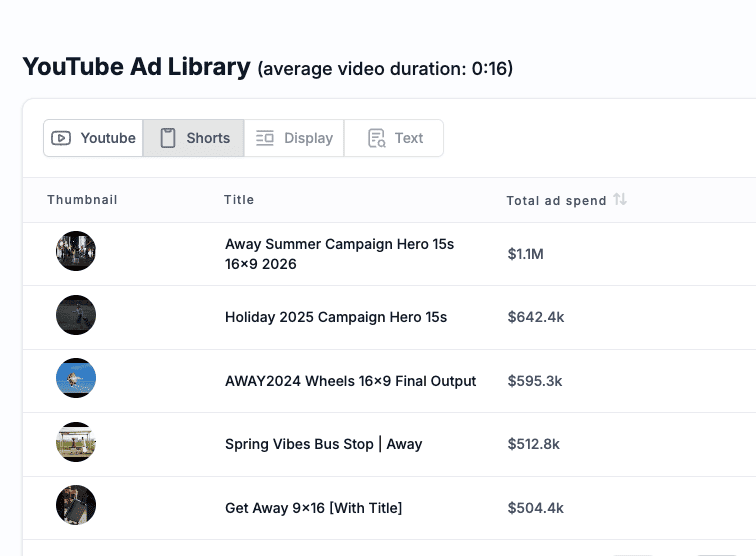
Inside VidTao, you can check out other cool, high-spending ads by the brand Away:
~ update from our friends at Funnel of the Week ~
Listicle Leaderboard Q1 2026
Our friends at Funnel of the Week just released a new interactive dashboard showing the top Listicle Landing Pages of 2026 so far…
It's completely searchable & interactive, and Listicle Categories include DTC health, beauty, gadgets, financial, education, info, software and a whole lot more:
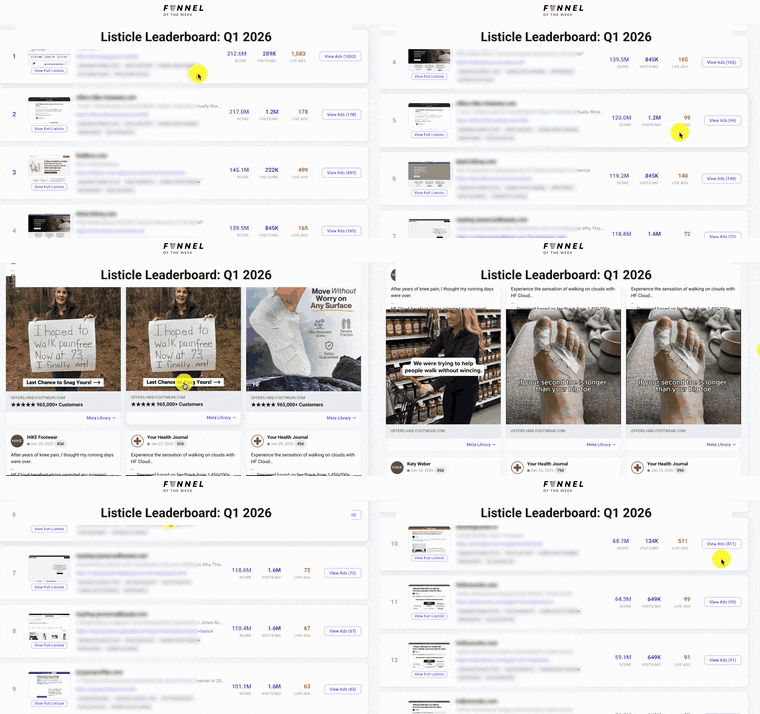
PLUS - see the ACTIVE STATIC ADS & VIDEO ADS running to these listicle landing pages right now
(So you can model the entire click -> presale journey for your own offers)
Want access? It's free.

 Ad 2: TrustedLocal ad (Concealed carry permit, accountability hook)
In this next ad, a middle-aged man in an LA cap stands outside, looks directly into the camera, and opens with:
"How many times are you going to think about getting your concealed carry permit before you actually do it?"
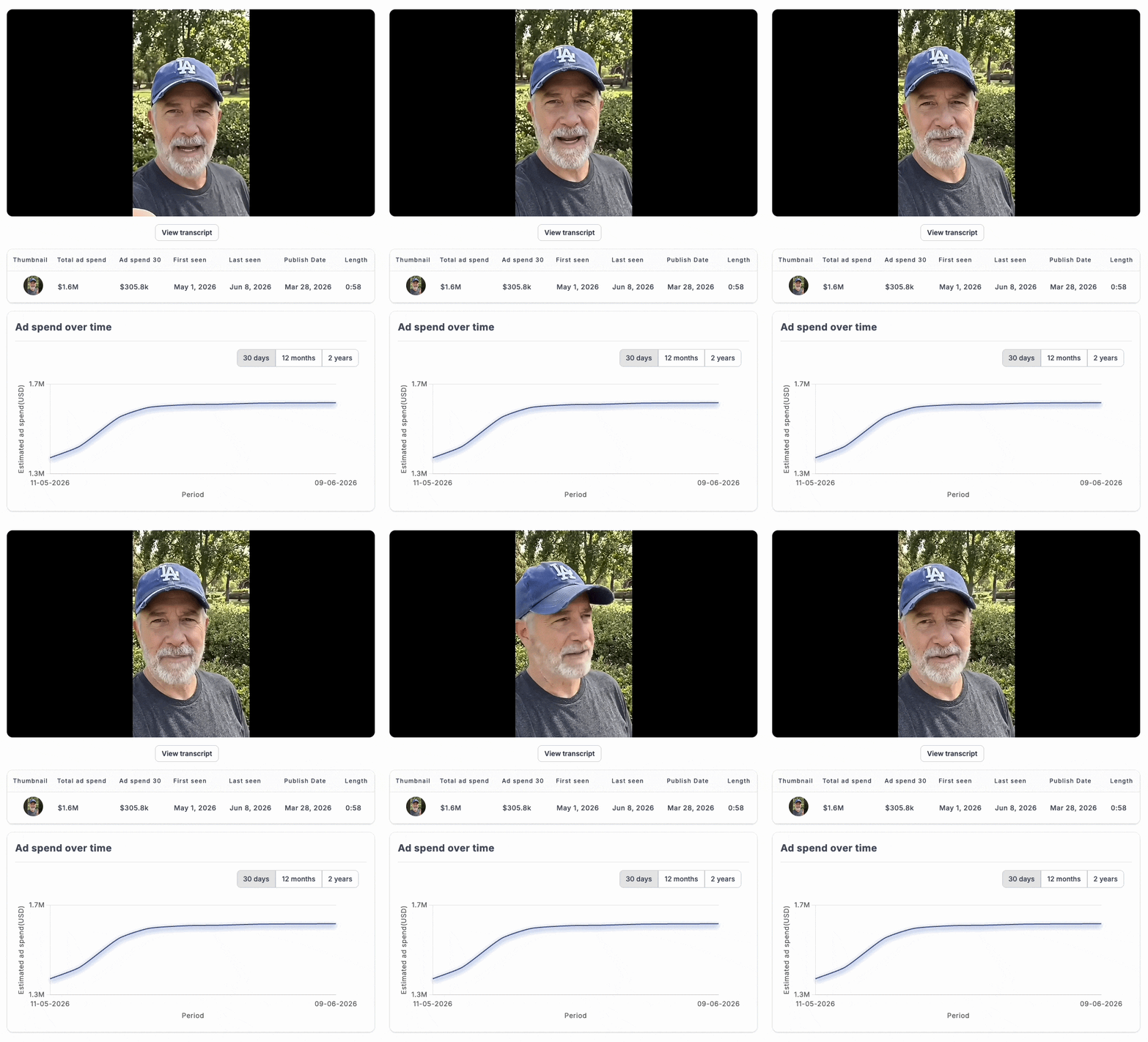
No introduction. No context. He's talking to someone specific - someone who has seen this ad before and scrolled past it. And he knows it.
The next 40 seconds are a direct, unflinching read of the viewer's own behaviour back to them. You saw this last week. You thought about it. You put your phone down. You went back to walking around with nothing on you. Nothing has changed. You still don't have the permit. You're still leaving your house every day completely unprotected. The only difference: you're one week closer to the deadline.
Then the mechanism: zip code, six questions, approved in 10 minutes, permit arrives in a week. And the urgency: they're shutting this easy pathway down at the end of the month. Everyone who gets in before that is grandfathered in. Everyone who waits goes back to the 8-hour class and the 6-month waiting list.
It closes the same way it opened - personal, direct, no softening: "You knew you wanted this the first time you saw it. Tap the link right now and get it done today."
Why this ad works:
 The ad is written as a second viewing, not a first. This is the rarest hook in direct response: an ad that explicitly assumes the viewer has already seen it and done nothing. Most ads try to create urgency from scratch. This one weaponises the viewer's own inaction against them - and the specificity ("you put your phone down and went right back to walking around with nothing on you") is so accurate it feels personal. That's not manipulation. That's just knowing your audience's behaviour pattern and naming it out loud.
 "The only difference is you're one week closer to the deadline" is clock-based guilt, not hype-based urgency. Most urgency in ads is external: limited stock, sale ending. This urgency is internal - time passing while you do nothing. It doesn't feel like a sales tactic because it's framed as a neutral observation about what procrastination costs. The viewer feels it rather than being told it.
 The process simplification does real conversion work. Zip code. Six questions. 10 minutes. Permit in your mailbox a week later. Against the implied alternative, 8-hour class, 6-month waiting list, that friction gap is enormous. The ad doesn't just make the product sound easy. It makes not acting sound absurd.
 The grandfathering close is a smart variant on deadline urgency. "Everyone who gets in before the deadline is grandfathered in" implies permanent advantage for early movers - not just a temporary discount, but a structural benefit that can't be recaptured later. That's a meaningfully different feeling than "sale ends Sunday." It raises the cost of waiting beyond just missing a price.
 The presenter's look is load-bearing. An older man in a casual cap, outdoors, no production setup - he reads as a peer, not a marketer. Someone who would actually care about this topic, in the demographic likely to care about this topic. The production choice and the product are perfectly matched.
Creative beats to swipe:
- Address a repeat viewer directly - assume they've seen the ad before and act accordingly.
- Read their inaction back to them in specific, behavioural terms. Not "you haven't acted yet" but "you put your phone down and went right back to X."
- Anchor the urgency in time passing, not external scarcity. Make procrastination the villain.
- Stack the process simplification against the worst-case alternative. The contrast does the selling.
- Use the grandfathering frame for deadline closes permanent structural advantage beats temporary discount.
- End exactly where you started: personal, direct, no exit ramp.
This advertiser also has other ads worth your time - don’t forget to check them out as well:
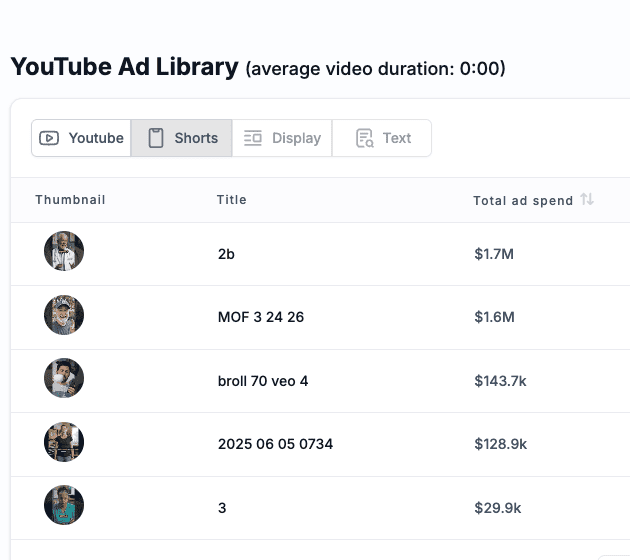
 "Spy" on 37 Million YouTube Ads
(and Landing Pages)!
Unlock proven strategies for success with the VidTao Premium YouTube Ad Library. Get instant access to your FREE VidTao trial today 
 Claim Your FREE VidTao Trial Now!
Take the guesswork out of YouTube ads – start scaling smarter.
That's all for this week! 
We hope this week’s selection of high-performing YouTube Shorts ads has sparked new ideas to test yourself!
Want more insights like these?
Stay tuned for next week’s VidTao 2 Shorts Tuesday…
…where we’ll continue breaking down winning YouTube Shorts Ads you can break down + model for your own creatives & campaigns.
And btw… If you have questions about YouTube ads or YouTube Shorts ads in particular?
Go here to schedule a free chat with our friends at Inceptly. Inceptly is a top Direct Response video ad agency, specializing in high-performing YouTube ad creatives & media buying.
Have a great week!
PS - Go here to Claim Your Free Trial of VidTao Premium: Access 37 Million YouTube Ads & Their Landing Pages!
PPS - Are you spending $1k/day+ on Paid Ads?  Go here to set up a free YouTube Ad brainstorm chat.