

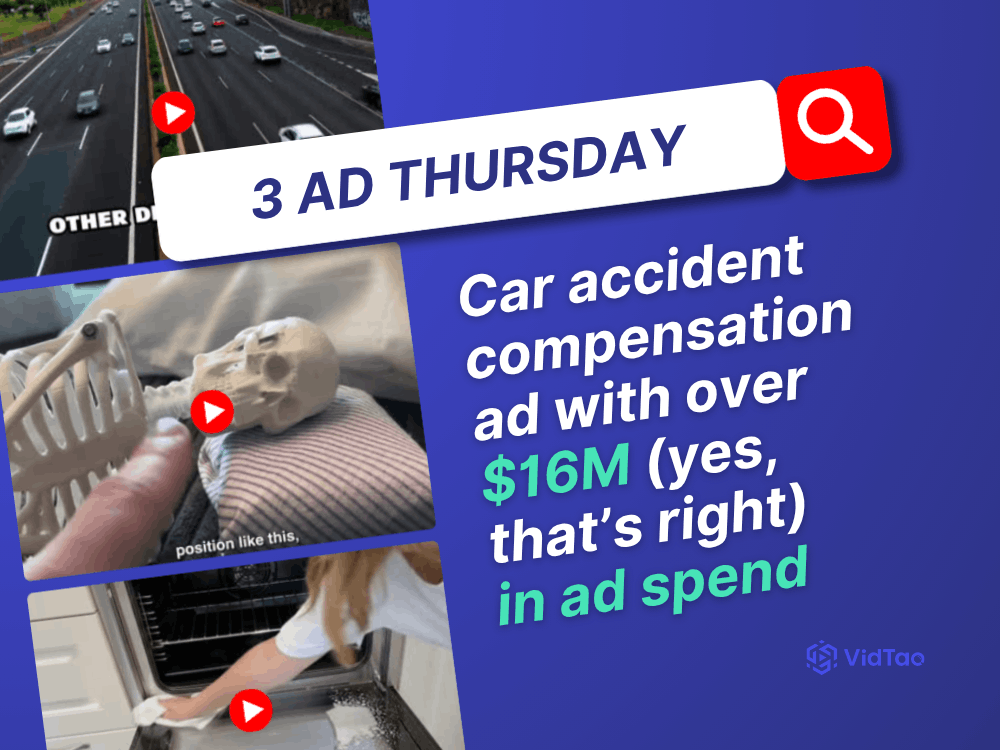
Welcome to, or welcome back to this week’s VidTao 3 Ad Thursday, where each week we’ll be diving into our VidTao ad intelligence software to uncover 3 high-performing YouTube ads driving results!
This week we’ve got three high-performing YouTube ads for you to check out & model, including:
 Car accident compensation ad with over $16M in ad spend...
 X-All cleaner ad with nearly a million in ad spend...
 Memory foam pillow ad with nearly $6M in ad spend…
Ready to check the ads out?
~ update from our friends at Funnel of the Week ~
Listicle Leaderboard Q1 2026
Our friends at Funnel of the Week just released a new interactive dashboard showing the top Listicle Landing Pages of 2026 so far…
It's completely searchable & interactive, and Listicle Categories include DTC health, beauty, gadgets, financial, education, info, software and a whole lot more:
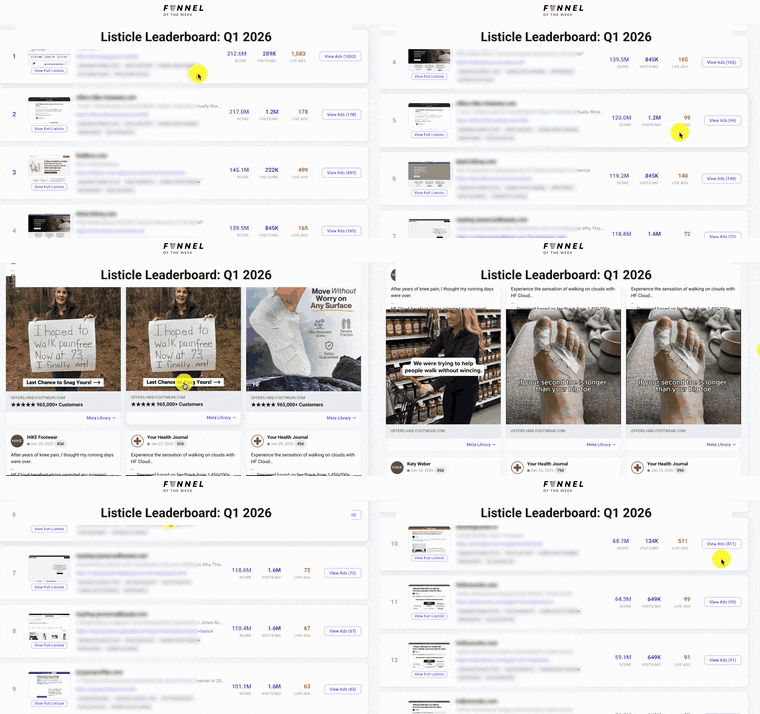
PLUS - see the ACTIVE STATIC ADS & VIDEO ADS running to these listicle landing pages right now
(So you can model the entire click -> presale journey for your own offers)
Want access? It's free.

Let's dive right in and take a closer look at this week's YouTube ad standouts and discover what makes them so successful.
Car accident compensation ad with over $16M in ad spend
Our first ad pick for this week is this car accident compensation ad we found inside VidTao, with ad spend of over $16! 
Here's the ad:
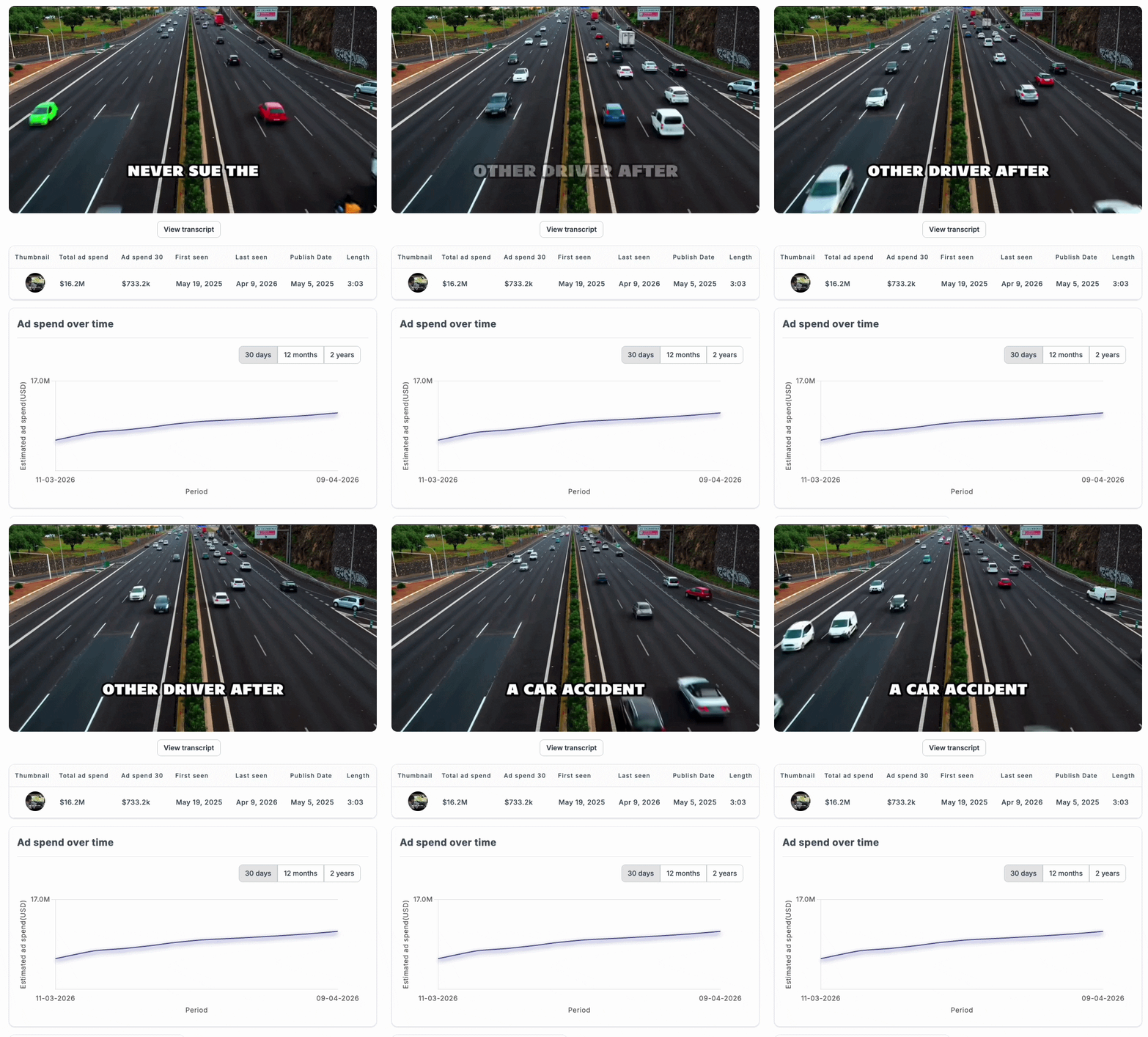
Let’s see what makes this ad work so well: Opening Hook
"Never sue the other driver after a car accident — there's a better way to get paid a way bigger check without going to court or paying expensive upfront legal fees."
"Never sue" is doing something genuinely clever — it positions the ad against its own category. Every personal injury lawyer ad tells you to call them and sue. This one opens by telling you not to, which immediately signals a different and superior approach. "Way bigger check" is the reward, "no court, no upfront fees" are the objections killed before they're raised. Three hooks in one sentence.
 Audience Qualification
"If you've been in a car accident in the past year, even as a passenger, you could be owed a significant cash payout."
"Even as a passenger" is a smart audience expansion — it catches viewers who wouldn't self-identify as accident victims eligible for compensation. The one-year window creates implicit urgency without stating it yet. "Significant cash payout" is deliberately vague — every viewer maps their own number onto it.
 Us vs. Them Setup
"While most victims are struggling with insurance companies and lawyers, others are receiving six and seven figure payouts without ever stepping foot in a courtroom."
Classic two-world contrast — the struggling majority vs. the informed minority. "Six and seven figure payouts" planted here before any mechanism explanation creates maximum aspiration. The viewer immediately wants to be in the second group.
 The "Program" Naming
"It's called the 2025 Compensation Program."
Naming a lead gen funnel as a "program" is one of the oldest and most effective reframes in legal marketing. It implies structure, legitimacy, and access — the viewer feels like they're being let into something official rather than handed off to a lawyer. "2025" adds currency and implies recent legal developments the viewer may have missed.
 The Josh Story
"Insurance offered him $4,000. After using the 2025 Compensation Program he walked away with over $100,000."
The $4,000 anchor is specifically chosen — it's believable as an insurance lowball and universally relatable as an insult. The 25x return feels extraordinary but not impossible. "Over 5 months after his accident" is a detail that expands the eligible audience — viewers who've already accepted a settlement or given up feel re-qualified.
 Mechanism Simplification
"Four simple multiple-choice questions. 30 seconds. 100% free. Sit back and wait until the check comes in."
The extreme simplification of the process is calibrated to the audience — people who've been through insurance claims know how exhausting the process is. "Sit back and wait until the check comes in" is the laziest possible version of getting paid, which is exactly the fantasy this audience wants to hear.
 The Visualization Close
"What would an extra $10,000 or even $100,000 do for you right now? Imagine paying off bills, covering rent with ease, finally having some breathing room."
The dual number offer ($10K or $100K) is smart — it covers both the modest and ambitious versions of the viewer's financial need. The visualization sequence (bills, rent, breathing room) targets financial stress directly, making the CTA feel like relief rather than a sales action.
 The Guilt Activation
"Insurance companies hope you never check what you're truly owed. Most people walk away with way less than they deserve — or worse, nothing at all."
Reframing inaction as being exploited by a faceless corporate enemy is a direct emotional trigger. "Insurance companies hope you never check" positions the viewer's passivity as something the villain is counting on — making clicking the link feel like an act of defiance rather than a sales conversion.
 Urgency Stack
"These cases don't stay open forever... if you wait too long you could lose your chance... walking away from life-changing money."
The statute of limitations is the most legitimate urgency mechanism in this entire series — it's real, verifiable, and genuinely consequential. Framing it as "walking away from life-changing money" makes inaction feel like an active financial mistake rather than a neutral choice.
 Important takeaways
  Open against your own category — "never sue" in a personal injury ad is counterintuitive enough to stop any scroll; positioning against the obvious solution signals superior insider knowledge
 Name your funnel like a program — "2025 Compensation Program" converts better than "fill out this form" because it implies access, structure, and legitimacy
 The contingency fee model is the ultimate objection killer — "you don't pay a cent unless you win" removes every financial barrier simultaneously; if your product or service can offer something equivalent, lead with it
 Use real scarcity when you have it — the statute of limitations is more credible than any manufactured countdown; always prefer genuine urgency over invented urgency
 Guilt shift reframes inaction as active harm — "insurance companies hope you never check" makes clicking feel like self-defense rather than a purchase decision
 Expand your audience with "even as a passenger" — one qualifier phrase that caught every viewer who wouldn't have self-identified as the target buyer
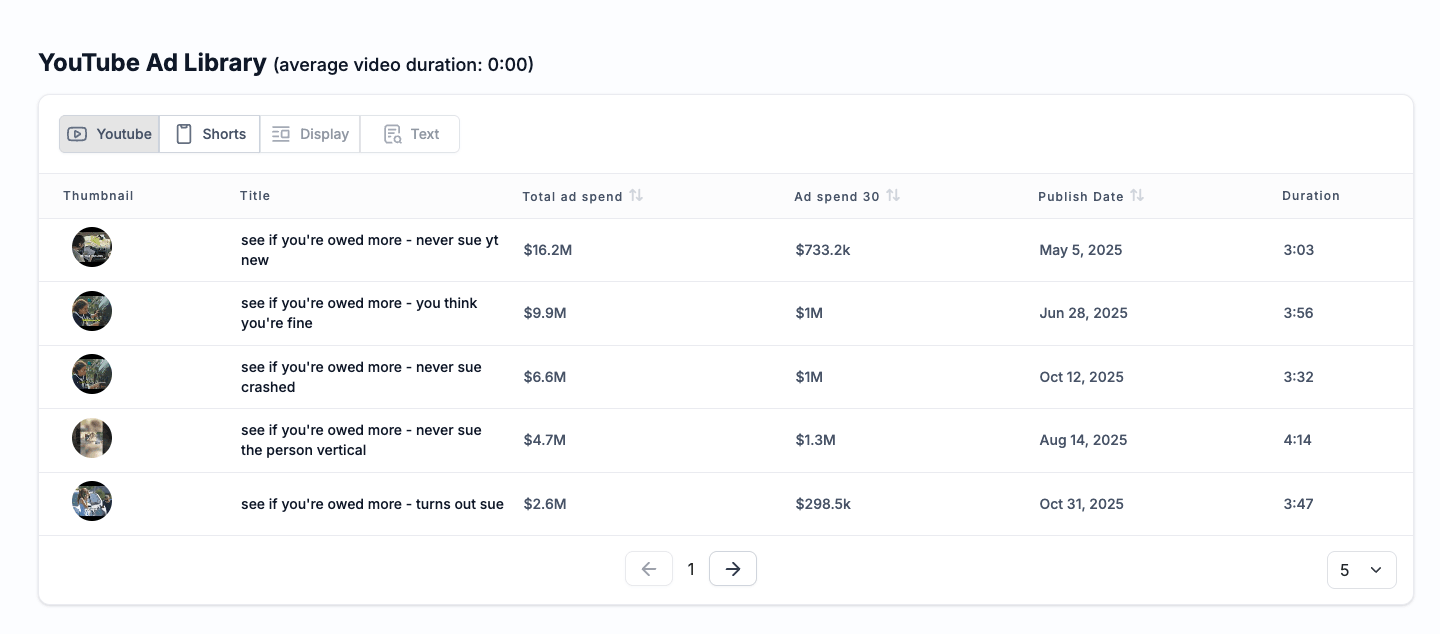
See more ads by The Crash Connect with millions in ad spend:
The tracking metric you've never heard of that 4x'd a $750M business 
99% of DTC Subscription brands miss this
Duolingo was stuck in 2018.
Yes, $750M in revenue & 40 million+ daily users…
But growth?
Flatlining.
Hundreds of tests running… Nothing moving the needle.
They were trapped optimizing metrics everyone tracks: conversion rates, retention rates, acquisition costs.
Then they used a framework that flips traditional tracking on its head…
…exposing the ONE metric that mattered most...
…buried in every DTC subscription brand's biggest blind spot.
When they tested it against everything else — new user acquisition, reactivation campaigns, onboarding flows — this one metric had 10x more impact than all of them.
The result?
4x growth.
Not from better ads. Not from new traffic sources. Not from a rebrand.
From tracking one transition that 99% of subscription brands completely ignore.
Want to see how you can uncover your DTC subscription business’s “magic metric”?
VidTao Co-Founder Brat Vukovich just wrote an article inside his weekly newsletter, The Dashboard, walking you through exactly how to dig into your own subscription business and uncover this golden insight.

PS — The Dashboard is where Brat shares weekly notes on building BraTrax, buying media, and making sense of performance data - without the fluff.
PPS — Send this link to a friend who needs it: blog.bratrax.com
X-All cleaner ad with nearly a million in ad spend
Our next ad - an X-All cleaner ad we found inside VidTao, with ad spend over $977K! 
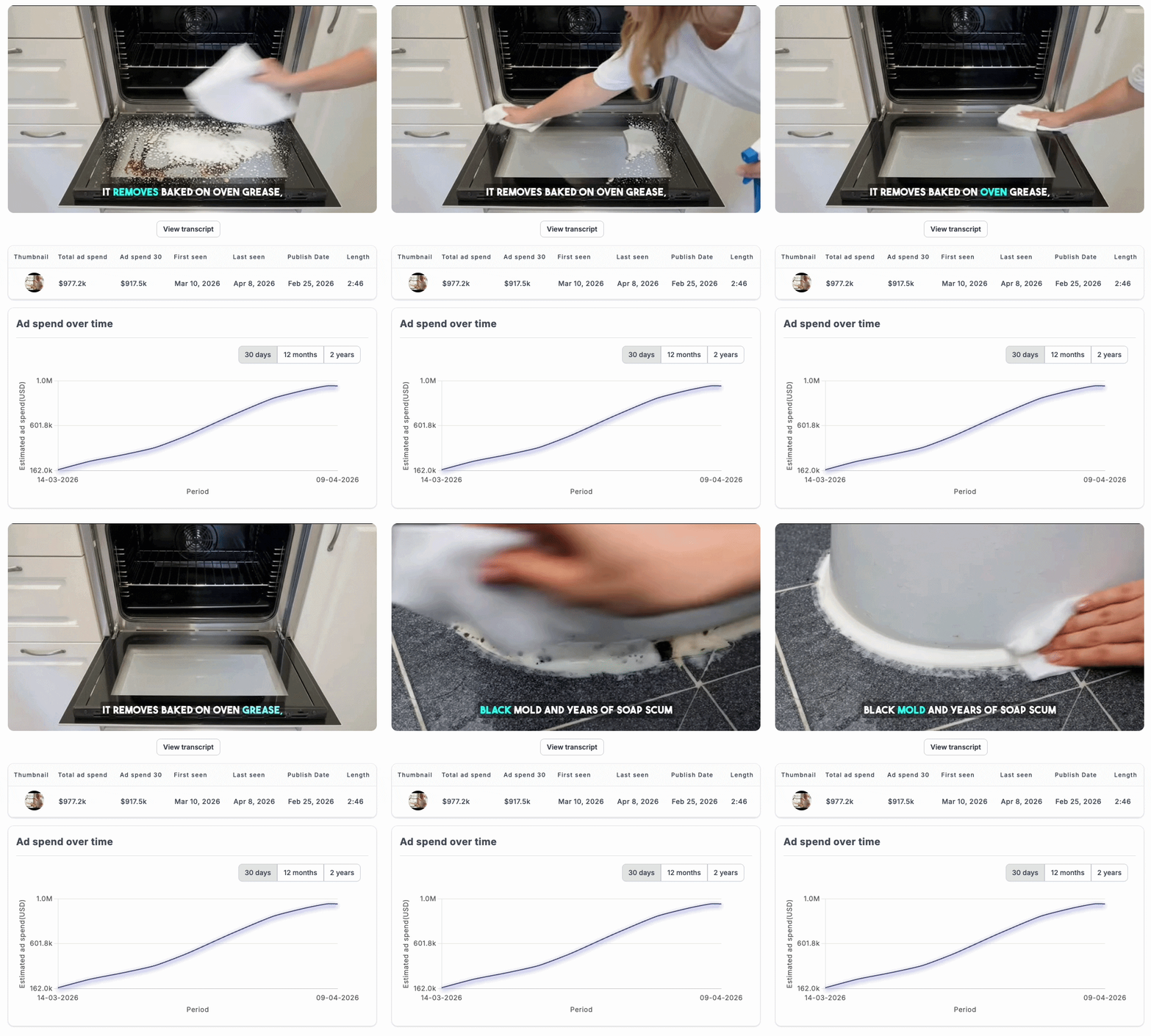
Here are some of the elements this ad consists of:
Opening Hook
"This cleaner is insane."
Two syllables, zero setup, maximum confidence. "Insane" is a pattern interrupt in a category that usually opens with gentle lifestyle imagery and soft claims. The three specific surfaces (oven grease, black mold, soap scum) cover every major cleaning nightmare in one line.
The three "withouts" — no scrubbing, no bleach, no toddler danger — are objection kills disguised as product descriptions. By the time the founder is introduced, the viewer already wants the product.
 The Founder Origin
"Invented by a world-class chemist named Janet Tan. When her daughter started crawling, she tried to switch to natural cleaners — and immediately the cleaning got worse."
Janet works as a character because she's both credible and relatable simultaneously — a combination most founder stories never achieve. "World-class chemist" establishes authority. "Her daughter started crawling" establishes the exact same motivation the target viewer has.
The failure moment — scrubbing twice as hard, worse results, still not sure it was safe — mirrors the viewer's own frustrating experience precisely.
 The Mechanism Reveal
"Most natural cleaners are so diluted that when you spray them on grease, the liquid just beads up on top — like water on a waxed car."
This is the single best mechanism analogy in the entire series. Every viewer has seen water bead on a waxed car. In three seconds, the ad has explained chemistry in a way that requires zero background knowledge and immediately makes the viewer feel like they've been lied to by every other cleaner they've ever used. The visual is so intuitive it's almost unfair.
 The Competitor Exposure
"MIT, banned in rinse-off products, was still sitting inside several bottles sold as natural."
Naming a specific banned chemical by its abbreviation signals genuine insider knowledge — most viewers won't know what MIT is, but the specificity makes the claim feel researched and credible. This is the same "expose the enemy's secret" mechanic used in the Florida insurance ad and the Shower Envy ad, but deployed with far more scientific precision. The entire natural cleaning category is implicated without a single brand name being mentioned — which keeps it legally clean while doing maximum competitive damage.
 The Format Differentiation
"It comes as a concentrated tablet. No liquid sitting in a bottle for months going weak. You mix it fresh at home and it hits your surfaces at full strength every time."
The tablet format could easily be positioned as a quirky novelty. Instead it's positioned as a structural superiority — the reason the product works better is the same reason it ships differently. "Full strength every time" turns a logistics innovation into a performance promise. This is how you make packaging a selling point.
 The Demo Moment
"3 years of baked-on grease. Spray, walk away 30 minutes, wipe once. The grease comes off in one pass. That's not an edited video."
"That's not an edited video" is a pre-emptive trust statement that does something interesting — it acknowledges the viewer's skepticism before they voice it, which paradoxically makes the demo feel more credible. The specificity of "30 minutes" and "one pass" sets a concrete expectation that the visual is designed to fulfill. This is demonstration copy at its most efficient.
 The Skeptic Reversal
"The ones who are most skeptical — the husbands, the people who said natural can't clean — are the ones who reorder the most."
Using the most resistant buyer persona as the proof source is a masterstroke. The viewer thinking "this sounds too good to be true" is told that people exactly like them are now the most loyal customers. It neutralizes skepticism by weaponizing it — doubt becomes evidence of future conversion rather than a barrier to it.
The Offer Stack
"60% off. 30-day money-back guarantee. Replaces everything under your sink. Lasts up to 10 months. Every ingredient named on the label."
Each offer element addresses a different purchase hesitation: price (60% off), risk (money back), complexity (replaces everything), ongoing cost (10 months), and trust (full ingredient transparency). The label transparency line is the closer — after an ad that exposed hidden toxins in competitors, "every ingredient is named" lands as the ultimate credibility signal. Important takeaways The "without" structure kills objections before they form — listing what your product doesn't require (scrubbing, bleach, safety concerns) in the hook is more persuasive than listing what it does
Use analogies to explain mechanisms, not descriptions — "water beading on a waxed car" teaches chemistry in 3 seconds; a technical explanation of surfactant chemistry would lose everyone
Founder credibility works when it's dual-layered — Janet is both an authority (chemist) and a peer (worried mom); most founder stories pick one; the best ones find a character who is both
Expose the category, not the competitor — implicating the entire natural cleaning industry with a banned ingredient revelation does more damage than any comparison ad while staying legally untouchable
Make your format a mechanism proof — the tablet isn't different for the sake of being different; it's different because freshness = strength; format differentiation that explains why it works better is a purchase driver, not a novelty
Use your most skeptical buyer as your proof source — "the husbands who said natural can't clean reorder the most" converts doubters by making doubt itself a predictor of satisfaction
This advertiser also has many other cool ads to model after, don’t miss out:
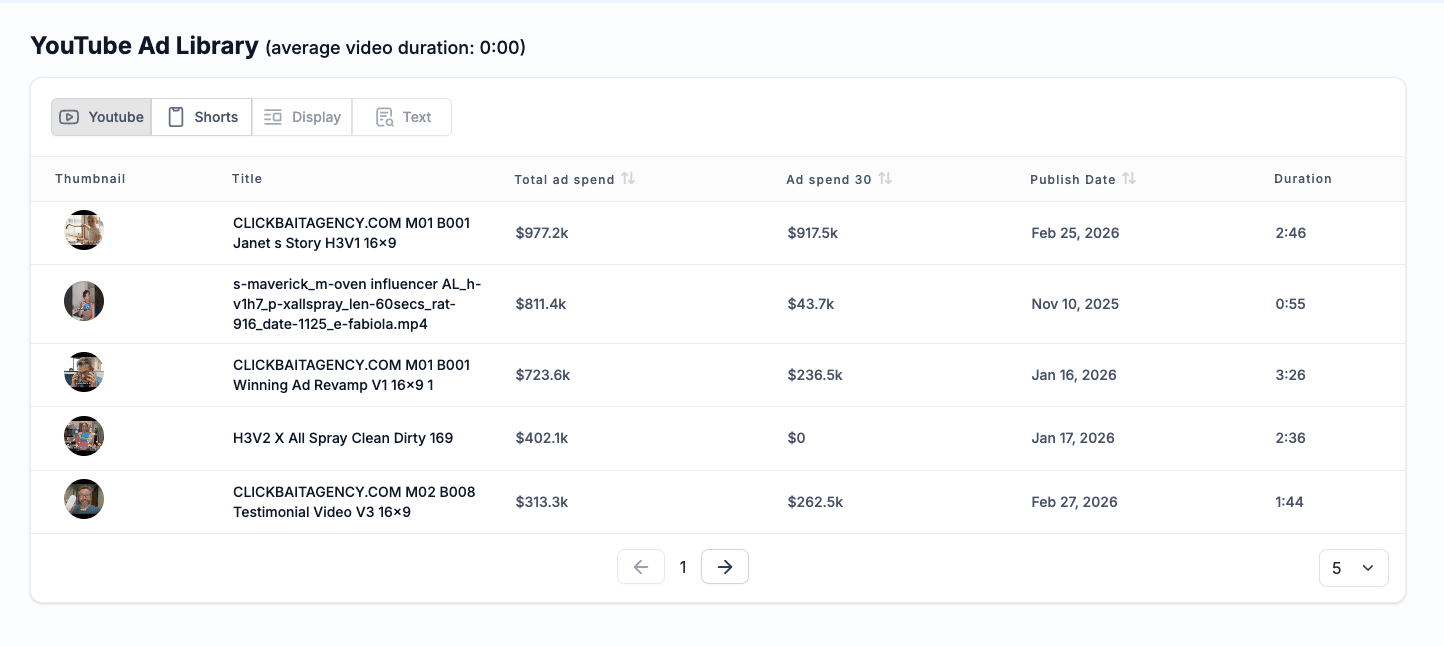
 "Spy" on 34.3 Million YouTube Ads
(and Landing Pages)!
Unlock proven strategies for success with the VidTao Premium YouTube Ad Library. Get instant access to your FREE VidTao trial today 
 Claim Your FREE VidTao Trial Now!
Take the guesswork out of YouTube ads – start scaling smarter.
Memory foam pillow ad with nearly $6M in ad spend
Last, but certainly not least - a memory foam pillow ad, check it out:
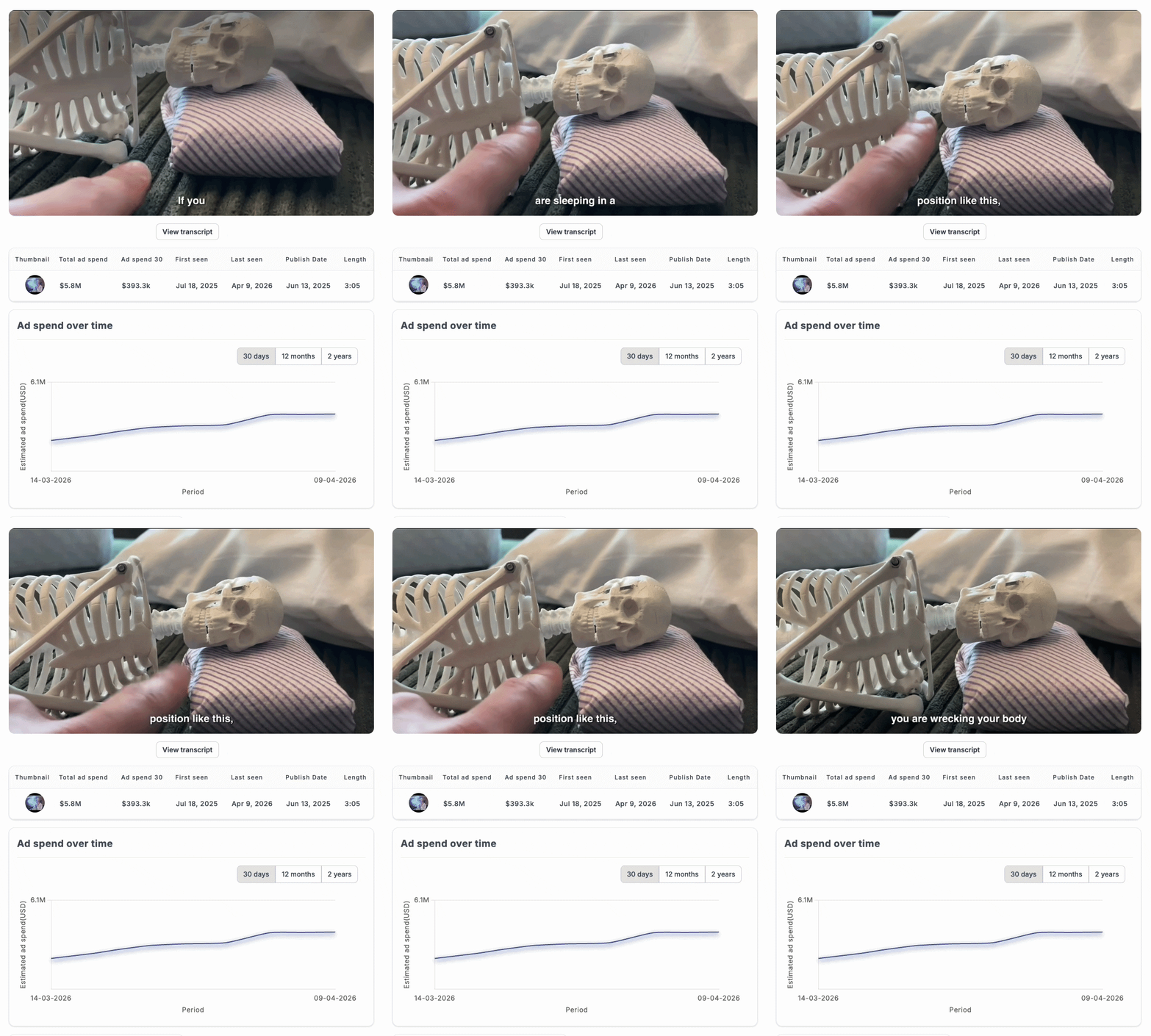
This ad has estimated ad spend of over $6M!
Let’s dissect this ad too and see what are some of the elements it combines for it success: Opening Hook
"If you are sleeping in a position like this, you are wrecking your body and your breathing."
The skeleton prop in the opening shot is a genius visual choice — it makes spinal alignment immediately visible and visceral in a way that a person lying on a pillow never could. "Wrecking your body" is alarmist but not specific enough to be dismissed — everyone has some neck or shoulder tension they can map onto it. The word "wrecking" is doing more work than "harming" or "damaging" — it implies ongoing destruction that's already in progress.
 The Invisible Danger Setup
"While it may only result in loud snoring, the hidden dangers are far greater than you think. Over 30 million Americans suffer from sleep apnea but only 20% know it."
This sequence is structurally identical to the Hume Band's "I felt completely fine" moment — the threat is invisible, the damage is accumulating, and the viewer has no symptoms to warn them. The 80% unaware figure is the key line: it mathematically qualifies most of the audience as potential sufferers without requiring any self-diagnosis. "Stress, hormonal imbalance, increased risk of stroke or dementia" escalates the stakes from bad sleep to life-altering consequences in two sentences.
 Doctor Introduction & Product Reveal
The clinic setting, white coat, medical equipment in background, and patient interaction all signal professional credibility without a single credential being stated. "If you care about your health and future, there is one simple way" is a soft but effective guilt-based bridge — it implies that not acting is a choice not to care about your own health.
The product reveal here is clean — Derila is introduced as the solution to a medical problem, not a comfort upgrade.
 The 7 Reasons Framework
The numbered structure works for two distinct reasons. First, it signals completeness — seven reasons feels exhaustive, like all the bases are covered. Second, each reason is designed to resonate with a different viewer pain point, meaning the ad converts multiple buyer personas simultaneously without losing any of them. A breakdown of each:
Reason 1 — Tucked Neck: Targets viewers with chronic neck stiffness. "Closes your breathing track" elevates discomfort to medical consequence.
Reason 2 — All Positions: Directly attacks competitor ergonomic pillows by name of their failure mode — "only works on your back." This is category contrast at its most precise.
Reason 3 — Shoulder Support: Expands the pain point from neck to upper body, catching viewers whose primary complaint is shoulder tension rather than sleep apnea.
Reason 4 — Jaw Relief: The underbite and clicking detail is hyper-specific — it's the kind of symptom that only resonates with people who have it, but when it does resonate, it converts with exceptional strength because no other pillow ad has ever spoken to it.
Reason 5 — Airflow: Introduces breathability as a medical benefit rather than a comfort feature — overheating causes nasal congestion causes airway swelling. The chain of causation makes the feature feel clinically grounded.
Reason 6 — Memory Foam: The only reason that addresses product longevity rather than health outcomes. "Loses shape and elasticity" is the competitor failure; "retains its shape and all its benefits" is the differentiator. Simple and clean.
Reason 7 — Circulation: The arm and shoulder circulation detail is the most unexpected reason on the list — and unexpected specificity always converts better than expected generality. Viewers who wake up with numb arms immediately feel seen.
The Close
"Click the link below to find out about exclusive limited deals. Time is ticking."
The close is the weakest part of the ad — "time is ticking" is generic and the urgency feels manufactured compared to the clinical precision of everything before it. The "Derila has their back, as well as their shoulder, neck, jaw and head" line is a clever callback that summarizes the 7 reasons in a single sentence — a good copywriting move that reinforces retention before the CTA.
Important takeaways
The 80% unaware stat is audience expansion genius — when you can show that most sufferers don't know they're suffering, you qualify your entire viewing audience as potential buyers without anyone having to self-diagnose
Numbered lists convert because they signal completeness — "7 reasons" feels exhaustive; the viewer trusts they're getting the full picture, which reduces post-purchase doubt before the purchase is even made
Build each reason for a different buyer persona — neck pain, shoulder tension, jaw clicking, numb arms — each reason is a separate hook for a separate viewer; the ad converts them all simultaneously
Attack competitor failure modes per feature, not overall — "other ergonomic pillows only work on your back" is more damaging than any general comparison because it's specific, verifiable, and lands exactly when the viewer is most receptive
Medical visual layering builds credibility without credentials — skeleton props, 3D airway animations, X-ray overlays, and clinic settings do the work of authority establishment that no claimed qualification ever could
Unexpected specificity converts better than expected generality — jaw clicking and numb arms are the two most surprising reasons on the list and almost certainly the two highest-converting for the viewers they reach
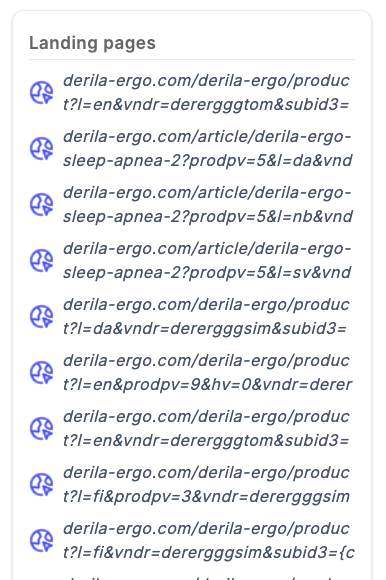
Inside VidTao ad intelligence tool, you can find relevant stats on this ad, landing pages in use and more!
Want to brainstorm with us on new ways to scale your business with
YouTube Ads (and other performance video platforms)?
Join us for a free YouTube ad brainstorming session here:
With that, we’re all done for this week! 
We hope this week’s selection of high-performing ads has sparked new ideas to test yourself!
Want more insights like these?
Stay tuned for next week’s VidTao 3 Ad Thursday, where we’ll continue breaking down winning strategies from the best YouTube ads in the game!
And btw… If you have questions about YouTube ads?
Go here to schedule a free chat with our friends at Inceptly. Inceptly is a top Direct Response video ad agency, specializing in high-performing YouTube ad creatives & media buying.
Have a great week!
PS - Go here to Claim Your Free Trial of VidTao Premium: Access 34.3 Million YouTube Ads & Their Landing Pages!
PPS - Are you spending $1k/day+ on Paid Ads?  Go here to set up a free YouTube Ad brainstorm chat.