

Welcome to, or welcome back to this week’s VidTao 3 Ad Thursday, where each week we’ll be diving into our VidTao ad spy tool to uncover 3 high-performing YouTube ads driving results!
This week we’ve got three high-performing YouTube ads for you to check out & model, including:
 Men prostate health ad (over $2.4m in ad spend)
  …
… Microsoft Copilot ad with nearly $3m in ad spend…
 Oregano oil supplement ad with over $4.5m in ad spend…
Ready to check the ads out?
Let's dive right in and take a closer look at this week's YouTube ad standouts and discover what makes them so successful.
Men prostate health ad (over $2.4m in ad spend)
Our first ad pick is this men's health prostate-related ad with over $2.4M in ad spend!

These are some of the elements this ad consists of: Opening Hook
"Quickest way to shrink your prostate."
A bold, absolute claim as pure text overlay before any speaker appears — functions as a thumbnail-style pattern interrupt designed to stop scroll on its own, independent of anything said in the video.
 Treatment Elimination
"Best way to fix prostate problems. Saw palmetto? Nope. What about Flomax? Nope. Antibiotics? Nope. Here's what actually works."
Naming real, medically recognized treatments and rejecting each in one word builds momentum toward the reveal — it also implicitly discredits standard medical care before an alternative has even been introduced, priming distrust of conventional options.
 Mechanism Explanation
"Think of your prostate like a C-clamp squeezing a garden hose... when your prostate gets swollen, the C-clamp tightens around your urethra, choking off your stream."
The mechanical metaphor is doing real persuasive work here — it's simple, visual, and intuitively "makes sense," which makes it feel more credible than it may be medically, since it reduces a complex physiological condition to a single squeezing action.
 Escalating Fear Sequence
"Some guys end up wetting themselves... others end up needing risky surgery that can leave you with a broken morning salute and leaking urine."
Stacking incontinence and sexual dysfunction as the consequence of inaction — rather than just "it gets worse" — targets two of the most specific, high-anxiety fears for the male target demographic in a single sentence.
 The Reveal
"According to research from Harvard, the real reason your prostate swells... comes down to bad bacteria taking over."
Citing "Harvard research" without specifics gives the mechanism claim borrowed institutional weight without offering anything checkable — a pattern that mirrors the vague-but-official credentialing used earlier for the presenter himself.
Competitor Dismissal
"Flomax relaxes muscles... but it doesn't stop the swelling. DHT blockers might shrink the prostate... but they'll crush your testosterone and kill your sex drive."
Reframes real medications as trade-off traps (temporary relief or a different serious cost) rather than genuine competing solutions, clearing space for the featured product to be positioned as the only option without a downside.
 Personal Credibility Stack
"As a doctor, I've seen this cycle destroy men's lives. Hell, that's exactly what happened to my own uncle... As a board-certified surgeon who's worked with the Boston Celtics and Harvard athletics..."
Combines professional authority with a personal, emotionally-loaded anecdote in back-to-back sentences — the uncle story humanizes the pitch right before the credential drop, so the credibility claim lands while the viewer is emotionally engaged rather than evaluating it critically.
 Solution Reveal
"A simple 30-second morning method that starts working within days by doing three things: kills the yeast and bad bacteria... releases your prostate's C-clamp grip... restores your good bacteria."
The three-part structure mirrors the earlier three-part mechanism explanation, giving the viewer a sense of a complete, matched solution — each stated problem gets its own numbered fix.
 Close
Close
"Don't wait until your prostate C-clamp is cranked so tight barely anything gets through... Up to 40% of men lose their morning salute after these procedures. Click below now."
Returns to the surgery-risk fear one final time immediately before the CTA, pairing a specific (and unverified) statistic with urgency language to push the click at peak anxiety.
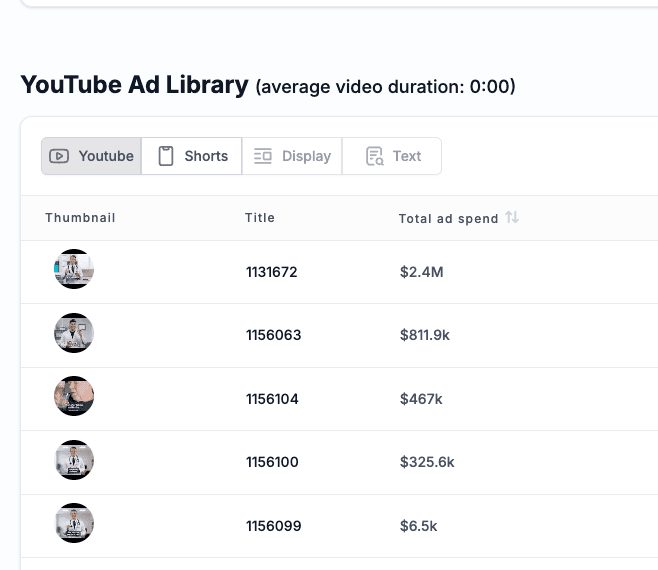
Check out more ads by this advertiser inside VidTao:
 Why this ad works:
- The C-clamp/garden hose metaphor succeeds because it replaces the need for real evidence with something that feels intuitively true — visual, mechanical logic is easier to accept on faith than a citation.
- Dismissing real treatments (saw palmetto, Flomax, antibiotics) before offering the alternative removes the viewer's usual reference points for comparison, so the featured solution is evaluated against fear and hope rather than against known options.
- Pairing professional authority with a personal, emotional anecdote (the uncle) in the same breath makes the credibility claim harder to scrutinize — viewers are absorbing an emotional story at the exact moment a hard-to-verify credential is dropped.
Microsoft Copilot ad with nearly $3m in ad spend
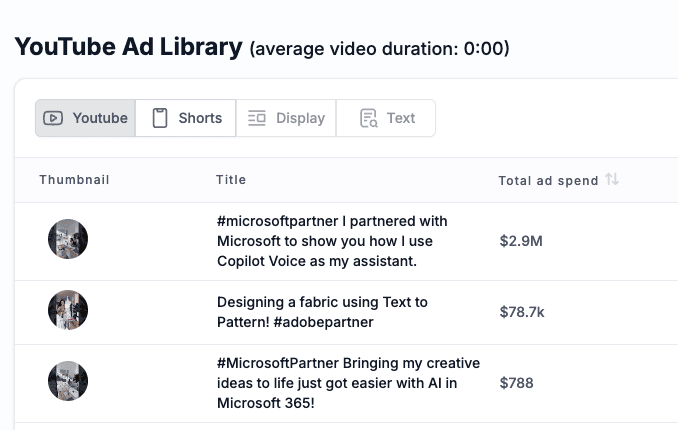
We found this really interesting Microsoft Copilot ad, with nearly $3M in ad spend, check it out:

Here are some of the elements this ad consists of: Opening Hook
"Ever wish you had your own assistant while juggling well everything? I have partnered with Microsoft to show you how Copilot Voice and Copilot Vision helped me stay on top of my sewing projects, baking, and running my small business."
Leading with the universal "juggling everything" feeling before listing her specific activities (sewing, baking, business) lets a wide range of viewers relate to the premise even if they don't sew or bake themselves — the specific examples come after the relatable frame is already set.
 Sewing Technique Query
"I'm making my pleated miniskirt. I just sent you the picture. Last time I made it in wool. How can I achieve this crisp knife pleat on silk linen?"
"Use a spray starch. It gives silk linen more body without the bulk of interfacing, allowing you to shape and set the pleats sharply."
This exchange is doing specific credibility work through technical specificity — "spray starch" and "without the bulk of interfacing" are precise, craft-literate answers, not generic advice, which supports the believability that the AI is engaging with the actual image and problem rather than giving a canned response.
 Recipe Brainstorm
"I don't like pumpkin pie, but I want to make something with pumpkin in it, and I have sourdough starter. Can you help me come up with some ideas?"
"How about baking pumpkin sourdough bread shaped like a pumpkin? You could also try pumpkin muffins or pumpkin cinnamon rolls."
Starting the query with an exclusion ("I don't like pumpkin pie") shows the assistant adapting to a stated preference rather than giving a generic pumpkin-recipe list, positioning Copilot as responsive to nuance, not just a search substitute.
 Business Communication Task
"I just finished making my new sewing pattern. I'm sharing my screen with you. Can you draft a message to my pattern grader?"
"Hi, Sonia. I hope you're doing well. I've just finished a new sewing pattern. The romantic gown features delicate lines with a fitted bodice and flowing skirt. The pattern ranges from size 00 to 12."
This is the clearest Vision-to-output demonstration in the ad — the AI produces a specific, detailed professional message referencing details (bodice, skirt, size range) that it could only know by seeing the shared screen, making the screen-sharing feature the visible mechanism behind a polished result.
Close
"Whether I'm sewing, drafting patterns, or baking, Copilot is the perfect assistant, helping me stay on track so I never miss a stitch or a rise. Click the link in my bio to learn more and shop your own Windows 11 Copilot Plus PC."
The pun ("never miss a stitch or a rise") ties the close back to the two core hobbies to keep it light and memorable, while the CTA pivots directly to a hardware purchase (Copilot+ PC), reframing the entire personal-assistant narrative as a device-buying decision.
Check out more ads by this advertiser here:
Why this ad works:
- Using a real working seamstress instead of a generic tech influencer gives every demo scenario built-in specificity — the spray starch answer and the size-range pattern description sound like genuine craft knowledge, which is harder to replicate convincingly with a staged or scripted "expert."
- Structuring the three demos around creative, personal, and professional tasks lets the ad imply broad capability without ever making a direct "does everything" claim — the viewer infers versatility from the variety of examples rather than being told about it.
- Making Vision the connective thread across two of the three demos (photo of fabric, live screen share) keeps the ad focused on the actual differentiating feature rather than diffusing attention across every Copilot capability at once.
- Worth noting: this is a paid partnership (#microsoftpartner, disclosed at the start) using a single creator's real workflow — the fluency and usefulness of each AI response in the video reflects an edited best-case interaction rather than a typical unscripted back-and-forth, which is worth factoring in when judging how representative these exchanges are likely to be in daily use.
Oregano oil supplement ad with over $4.5m in ad spend
Last but not least - this oregano oil supplement ad we found inside VidTao, with over $4.5M in ad spend!

We dissected it, and these are some of the elements the ad consists of:
 Opening Hook
"Here's what your body goes through when you start taking Nature's Ozempic for 4 weeks."
Framing the entire ad as a preview of an inevitable process ("what your body goes through") rather than a possibility removes conditional language from the very first sentence — the outcome is presupposed before any claim has been supported.
 Immediate Effect Claim
"Minutes after your first pouch, you'll feel the constant sugar cravings finally disappearing. That's the 85% pharmaceutical grade carvacrol, killing the bad bacteria and yeast in your gut that have been making you crave sweets non-stop."
Citing a specific percentage ("85%") and a specific compound ("carvacrol") gives an extraordinarily fast claim (minutes) a veneer of pharmacological precision — specificity is substituting for plausibility here, since gut flora shifts happening within minutes of ingestion is not how digestion or microbiome change works.
Root Cause Reframing
"Oregano oil starts rebalancing your gut flora and cutting off the root cause of your overeating."
Recasting overeating as a bacterial problem rather than a behavioral or caloric one shifts responsibility away from diet and lifestyle entirely — this is the same "root cause" rhetorical structure used in the earlier prostate ad, relocating a common health concern to an invisible, product-fixable internal cause.
External Validation Stack
"Week two, your clothes start fitting completely different... people at work start asking if you're doing something different... Week three, friends start commenting that your face looks thinner. Your husband notices your stomach doesn't stick out anymore."
Sequencing observations from coworkers, friends, and a spouse across two separate weeks builds a layered social-proof narrative — each new voice adds a fresh, independent-feeling confirmation without requiring any actual data or before/after imagery.
 Mechanism Escalation
"The craziest part, you haven't changed your diet at all... but carvacrol is signaling your genes to stop creating new fat cells and stop burning the old ones."
Introducing genetic signaling as the explanation for results achieved with zero behavior change is the ad's most significant leap — it explicitly removes diet as a variable to make the supplement look solely responsible, while invoking "genes" to sound more scientifically authoritative than a typical supplement claim.
 Outcome Summary
"You've lost an average of 12 lbs of pure belly fat just by taking two pouches daily. Your stomach is flatter, your energy is through the roof, and you actually want to be intimate again."
Closing the timeline with a specific average weight figure, plus energy and libido improvements, stacks three separate desirable outcomes into one sentence — broadening the product's appeal beyond weight loss alone into overall vitality.
 Mechanism Recap
"Resilia combines two clinically proven oils that work together. Oregano oil with 85% carvacrol rebalances your gut bacteria and kills the yeast causing sugar cravings. Black seed oil lowers stress hormones that force belly fat storage. Thymoquinone turns off your fat storage genes."
Restating the mechanism in a tidy, two-ingredient summary at the end functions as a recap that sounds like a product label — giving the preceding narrative claims a falsely authoritative, almost regulatory-sounding close.
Close
"Over 50,000 women have experienced this exact transformation. You can get yours today with free shipping and a 90-day guarantee, but we only have 642 pouches left in this batch and Big Pharma is trying to shut us down."
The oddly specific inventory number (642) manufactures urgency through false precision, while "Big Pharma is trying to shut us down" preemptively frames any future negative information about the product as suppression rather than legitimate criticism.
You can also use VidTao to spy on this (or any other!) advertiser’s landing pages in use:

Why this ad works:
- The week-by-week structure borrows the credibility of a clinical study format without any actual study behind it — sequencing claims by week makes an implausible overall transformation feel like a series of smaller, individually believable steps.
- Layering third-party observations (coworkers, friends, husband) instead of only first-person claims makes the transformation feel externally verified, even though none of these reactions are shown or sourced.
- The "85% carvacrol" and "genes" language gives ordinary supplement ingredients (oregano oil, black seed oil) a pharmaceutical-sounding specificity that most viewers can't independently verify, borrowing credibility from real biochemistry terms without real supporting evidence.
What if you could search VidTao by hook?
Not keywords. Not brand names. The actual hook type: problem agitation, pattern interrupt, bold claim, curiosity gap…
Imagine one search inside VidTao:
"Vertical UGC-style ads in my niche, problem-agitation hook, before/after proof, aimed at problem-aware audiences, sorted by total spend."
…and it just shows you the winners.
 VidTao 3.0 is coming, and this is just one of the new features. Stay tuned.

VidTao 3.0 preview
We're all done for this week!
We hope this week’s selection of high-performing ads has sparked new ideas to test yourself!
Want more insights like these?
Stay tuned for next week’s VidTao 3 Ad Thursday, where we’ll continue breaking down winning strategies from the best YouTube ads in the game!