

Welcome to, or welcome back to this week’s VidTao 3 Ad Thursday, where each week we’ll be diving into our VidTao ad spy tool to uncover 3 high-performing YouTube ads driving results!
This week we’ve got three high-performing YouTube ads for you to check out & model, including:
 Weight loss program ad with over $2.5M in ad spend…
 Air purifier ad with over $700k in total ad spend…
 Concealed carry permit lead generation ad by Charles Wilson …
Ready to check the ads out?
~ update from our friends at Funnel of the Week ~
Listicle Leaderboard Q1 2026
Our friends at Funnel of the Week just released a new interactive dashboard showing the top Listicle Landing Pages of 2026 so far…
It's completely searchable & interactive, and Listicle Categories include DTC health, beauty, gadgets, financial, education, info, software and a whole lot more:

PLUS - see the ACTIVE STATIC ADS & VIDEO ADS running to these listicle landing pages right now
(So you can model the entire click -> presale journey for your own offers)
Want access? It's free.

Let's dive right in and take a closer look at this week's YouTube ad standouts and discover what makes them so successful.
Weight loss program ad with over $2.5M in ad spend
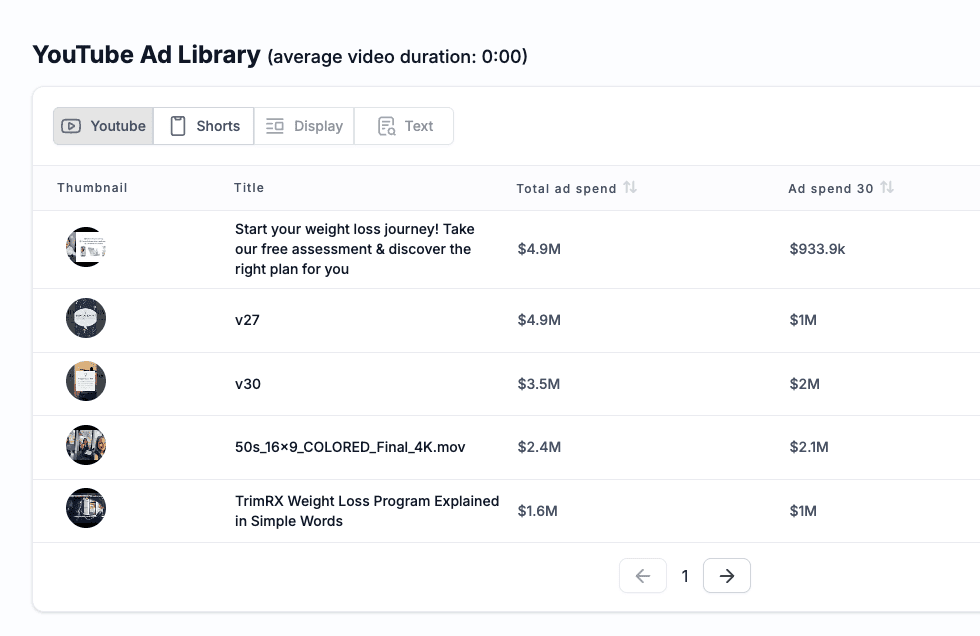
Check out this weight loss program ad by TrimRx we found inside VidTao:

This ad has total ad spend of over $2.5M!
We dissected it, and here are some of the elements that make this ad stand out: Opening Hook
"My daughter and I were going through old pictures, and I honestly didn't even recognize myself."
The photo album scene is doing multiple jobs simultaneously. Visually it's intimate and nostalgic - two women on a bedroom floor surrounded by memories. Emotionally it triggers one of the most universal female experiences: seeing a photo of yourself and feeling estranged from it. "I didn't even recognize myself" is the weight loss category's most powerful six-word hook because it frames the problem as identity loss rather than physical appearance - which makes the solution feel like restoration rather than vanity.
 The Biology Permission Slip
"Our bodies change, especially for women. And it's not always something you can just diet your way out of."
This is the ad's most strategically important copy. In eleven words it dismantles the guilt and shame that makes weight loss advertising feel predatory - telling the viewer that her struggle isn't a personal failure but a physiological reality. "Especially for women" acknowledges hormonal change, perimenopause, and metabolic shift without naming any of them. The viewer feels understood before the product is even mentioned, which makes the recommendation that follows feel like help rather than a sales pitch.
 The Recommendation Structure
"That's why I recommended my mom try TrimRx."
The daughter recommending the product to her mother is an unusual inversion of the standard testimonial format - typically the person speaking is the one who used the product. Here the daughter's recommendation adds a layer of external validation: someone who loves this woman and wants the best for her chose this product. It's peer trust filtered through familial love, which is the highest-credibility endorsement structure available.
 The Process Simplification
"Connected with a licensed provider. Got a plan made for my body. Monthly cost was straightforward and affordable."
Three steps, three sentences, no jargon. The "made for my body" phrasing does quiet but important work - it signals personalization without requiring any explanation of how that personalization works. "Straightforward and affordable" addresses the two most common telehealth objections (confusion and cost) in four words, with the $159 price point visible on the final card to confirm "affordable" isn't vague.
 The Result Moment
"I've lost 20 lbs and I haven't felt this confident for as long as I can remember. The food noise is gone and I'm back on track."
Two result statements operating on two different levels. "20 lbs" is the rational proof - specific, measurable, credible. "Haven't felt this confident for as long as I can remember" is the emotional proof - the identity restoration that the opening hook promised. "Food noise is gone" is the insider signal - it tells the GLP-1-curious viewer that this persona experienced the authentic mechanism of action, not just a diet result. Together the three statements cover rational, emotional, and clinical credibility in under ten seconds.
 Cinematic Close
The floral dress reveal shot - woman spinning in a doorway, lit warmly, visibly lighter and happier - is a classic transformation visual executed at a production level that most DTC health brands don't attempt. The restaurant scene with daughter laughing completes the lifestyle promise: this isn't just about weight, it's about being present in your life again. The Polaroid-style selfie photo on the final card ties back to the opening photo album scene, closing the narrative loop with visual elegance.
 Takeaways:
 "I didn't recognize myself" converts harder than any before/after stat in women's weight loss - identity loss is a deeper pain point than physical appearance, and speaking to it positions your product as restoration rather than vanity.
 The biology permission slip removes guilt before the product is introduced - telling the audience their struggle isn't their fault is the most powerful trust-building move available in any health category.
 Inverting the testimonial structure - recommender speaks, not the user - adds a layer of external validation that self-testimonials can't achieve - someone who loves you choosing this product for you is more credible than you choosing it for yourself.
 "Food noise" as insider language signals authentic treatment experience - category-specific terminology that the genuinely curious audience already knows acts as a credibility signal that no amount of polished copy can fake.
 Closing the narrative loop visually - opening with old photos and ending with a Polaroid selfie - creates a story arc that makes a 49-second ad feel emotionally complete rather than truncated.
 Production quality is itself a trust signal in health categories - cinematic lighting, warm color grading, and multiple locations signal brand legitimacy and staying power in a space full of low-budget UGC competitors.
This advertiser has many other high-spending ads to model after, don’t forget to check them out as well:
Air purifier ad with over $700k in total ad spend
Up next we have this air purifier ad, with over $700k in total ad spend!

These are some of the elements this ad consists of: Opening Hook
"You've got to hear about this thing."
Five words that trigger the oldest social transmission instinct humans have - being told a secret worth sharing. The casual, excited delivery signals peer recommendation rather than advertising. "Basically a mold killer" is a colloquial product description that sounds like something a friend would say rather than a copywriter, which is precisely why it works. The hand holding the small white device - unbranded, approachable, fits in a palm - makes the product look accessible before a single claim is made.
 The Hidden Threat Activation
"Eliminates 99% of mold in 48 hours without any filters. Even destroys mold hiding inside your walls and vents where regular purifiers can't reach."
Two claims, two separate fear activations. "99% in 48 hours" is the outcome claim - specific enough to feel tested. "Inside your walls and vents" is the invisible threat claim - it tells the viewer that the mold they can't see is the real danger, which is far more frightening than mold they've already spotted. The CGI animation of green spores floating through a home, being hunted by a red beam from the device, makes the invisible threat visually concrete.
 The Industry Conspiracy
"Filter companies are purposely selling you replacements that only catch 10% of the problem while letting hidden mold keep growing, forcing you to shell out $200 every few months."
The conspiracy frame serves a double function: it explains why the viewer has never heard of this solution (it's being suppressed) and it retroactively invalidates every competitor product they've ever bought (they were all part of the scam). "Purposely" is the key word - it transforms corporate incompetence into deliberate exploitation, which generates anger rather than disappointment. Angry customers buy to reclaim agency.
 NASA Authority Layer
"NASA-developed ionic technology originally created for space stations."
Structurally identical to "Nikola Tesla's forgotten invention" from the energy ad earlier in this series. NASA is the authority figure - universally trusted, government-adjacent, scientifically credible, completely unable to sue for misuse of its name in this context. "Originally created for space stations" adds the suppressed-technology implication: this exists, it works, but it was kept away from the public. The viewer doesn't need to verify any of this - the NASA association does the credibility work instantly.
 The Whistleblower Origin Story
"David, a senior engineer at one of the world's largest HVAC companies, discovered internal testing that made him sick to his stomach. When he tried warning customers, legal showed up. So he said screw it - I'll just create the solution myself."
This is the ad's most sophisticated section and the one most worth studying. "David" has no surname, no company name, no verifiable identity - but he has a narrative. The origin story hits every beat of the hero's journey compressed into 40 seconds: ordinary man → shocking discovery → institutional suppression → moral rebellion → creation of the solution. The actor in the blue work shirt reading documents in front of engineering monitors adds visual credibility without requiring any factual claim. The legal threat detail is particularly clever - it explains why you've never heard of this before while simultaneously making the product feel dangerous to the establishment.
 The Mechanism Stack
"20 million negative ions per second that hunt down mold. The same system NASA uses to keep the space station mold-free."
"20 million negative ions per second" is a number so specific and large that it feels scientifically documented - even though it's completely unverifiable. The NASA callback at this point is the second use of the same authority anchor, reinforcing the credibility established earlier. "Hunt down mold wherever it hides" personifies the product's action, making it feel aggressive and purposeful rather than passive.
 Distribution Conspiracy Close
"You can't find it on Amazon or any other big stores. The filter companies are trying to ban it because it means you'll never have to buy replacement filters again."
"Not on Amazon" is reframed from a distribution limitation into proof of suppression. This is a masterful inversion - a feature that would normally signal illegitimacy (why isn't it on Amazon?) becomes evidence of the product's threat to established interests. The viewer who might have been suspicious about the lack of major retail presence now sees it as validation.
 Urgency Stack Close
60% off + "you have to be fast" + suppression threat + 30-day money-back guarantee. Four urgency and risk-reversal elements stacked in the final 20 seconds. The money-back guarantee is the last element - placed to neutralize any remaining resistance after the urgency has been applied.
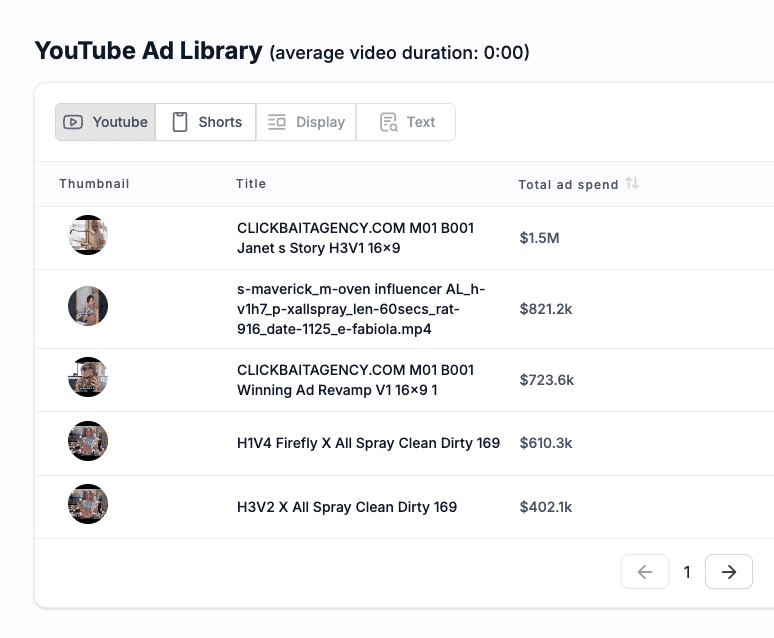
X-All advertiser has other cool ads not to miss out on as well! Here’s a sneak peek:
Takeaways:
"You've got to hear about this thing" is one of the most replicable hooks in direct response - word-of-mouth framing from the first syllable bypasses ad-recognition instincts before the viewer knows they're watching an ad.
The invisible threat is always scarier than the visible one - "mold inside your walls where regular purifiers can't reach" converts harder than "mold you can see" because the viewer can't disprove it and can't ignore it.
Reframing distribution limitations as suppression evidence turns a weakness into a proof point - "not on Amazon because they're trying to ban it" is a more persuasive explanation than the true reason, whatever it might be.
The hero origin story replaces credential verification - "David, 15-year HVAC engineer, threatened by legal, built the solution himself" requires zero verifiable facts but creates complete narrative credibility through story structure alone.
Retroactive competitor invalidation converts existing frustration into purchase motivation - telling someone every air purifier they've ever owned was only solving 10% of the problem converts sunk cost frustration into anger at the industry, not skepticism of the new product.
 "Spy" on 42M YouTube Ads
(plus Landing Pages)!
Unlock proven strategies for success with the VidTao Premium YouTube Ad Library. Get instant access to your FREE VidTao trial today 
 Claim Your FREE VidTao Trial Now!
Take the guesswork out of YouTube ads – start scaling smarter.
Concealed carry permit lead generation ad by Charles Wilson
Lastly for today - we chose this concealed carry permit ad to analyze, check it out:

You already know the drill, let’s analyze this ad together: Opening Hook "Congress probably just did the most brilliant thing I've seen for gun owners in a while." "Probably" is doing quiet work here — it adds just enough hedge to sound like genuine opinion rather than scripted copy, which makes the enthusiasm feel more authentic. "Most brilliant thing for gun owners" activates tribal identity immediately — the viewer self-selects in or out within the first syllable. The Congress hearing footage in the background adds institutional weight without requiring any specific claim about what Congress actually did.
 The News Graphic Authority Layer (0:07–0:14) "National Concealed Carry Reciprocity Act Now In Effect Across the United States — Washington D.C., July 9, 2025." The fake news graphic is the ad's most sophisticated deception mechanic. It's formatted to look like a wire service news release — location dateline, formal language, official-sounding act name. For a viewer who already wants this to be true, it functions as confirmation rather than a claim to be verified. The "Reciprocity Law" lower-third caption appearing simultaneously reinforces the visual with audio, double-stamping the false authority.
 The Zip Code Map Personalization (0:16–0:22) Real zip codes pinned to a glowing US map — CA, AZ, IL, TN — fly across the screen as the persona talks about the permit being processable online. The viewer's brain automatically asks: "Is my zip code on that map?" The answer is almost certainly yes, which is exactly the micro-curiosity that drives the click to enter their zip code and find out. Geographic specificity creates personal relevance without requiring any actual targeting.
The Suppression Frame (0:19–0:24) "The anti-gun establishment doesn't want you to know how simple this is, but they can't prevent you from processing it either." Identical architecture to the Xallair "filter companies are trying to ban it" and the Tesla "energy monopolies don't want you to know" lines. The suppression frame does two jobs: it explains why the viewer hasn't heard about this before (it's being hidden) and it makes the click feel like an act of resistance against a named enemy. "They can't prevent you" converts passive curiosity into active defiance.
 The Zero-Friction CTA (0:24–0:32) "Just tap below and enter your zip code. Answer six simple qualifying questions. Get your permit application processed immediately." Three steps, zero cost, zero commitment language. "Qualifying questions" reframes a lead capture form as a vetting process — the viewer isn't giving away their data, they're finding out if they're eligible for something. The hourglass graphic with "TAP THE LINK BELOW TO SEE IF YOU QUALIFY" on the black card close mirrors the Crash Connect "check if you qualify" mechanic exactly — same lead gen structure, different political identity wrapper.
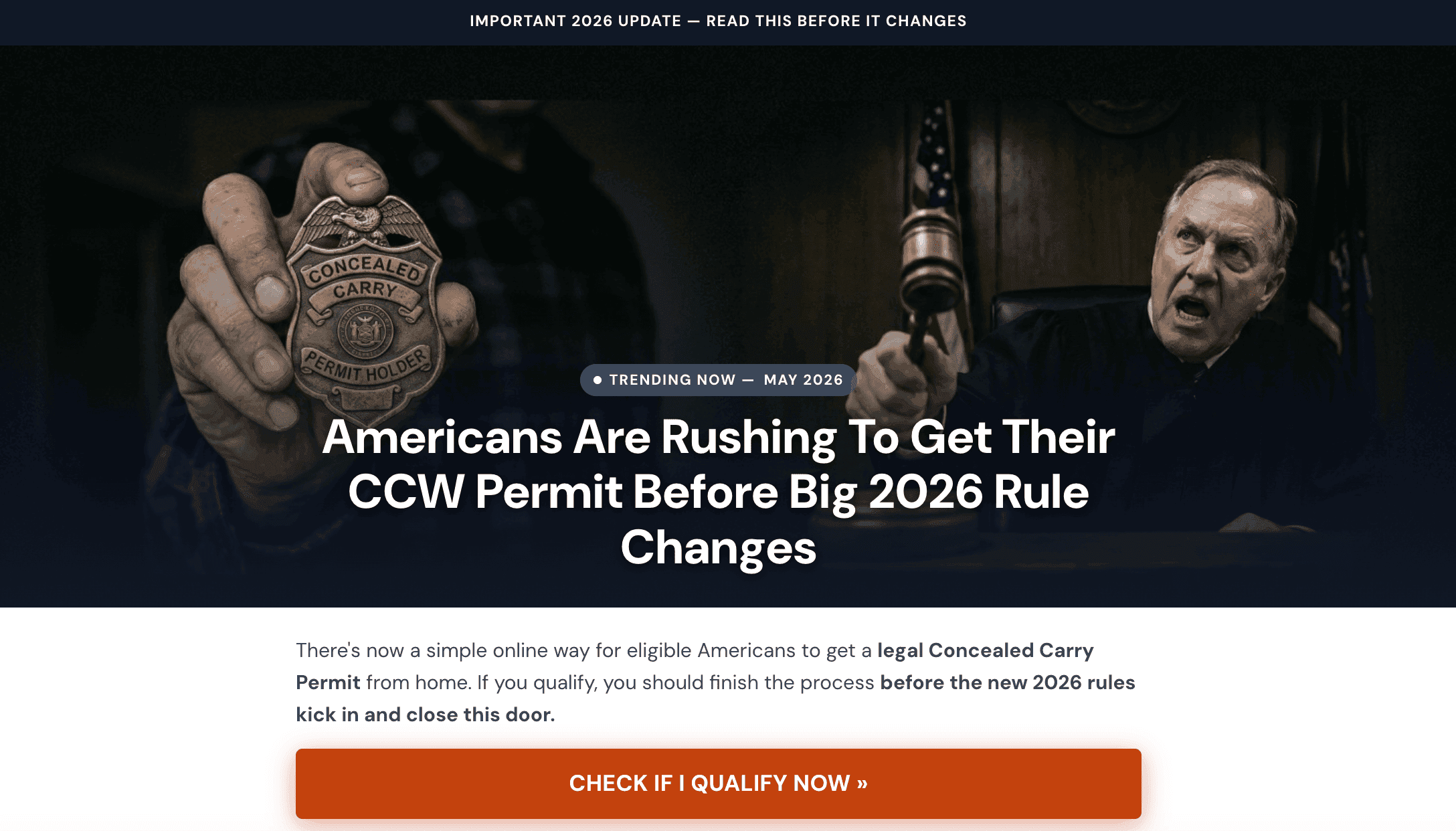
Now, here’s a quick look at their landing page in use:
Want to brainstorm with us on new ways to scale your business with
YouTube Ads (and other performance video platforms)?
Join us for a free YouTube ad brainstorming session here:
That's all for this week! 
We hope this week’s selection of high-performing ads has sparked new ideas to test yourself!
Want more insights like these?
Stay tuned for next week’s VidTao 3 Ad Thursday, where we’ll continue breaking down winning strategies from the best YouTube ads in the game!
And btw… If you have questions about YouTube ads?
Go here to schedule a free chat with our friends at Inceptly. Inceptly is a top Direct Response video ad agency, specializing in high-performing YouTube ad creatives & media buying.
Have a great week!
PS - Go here to Claim Your Free Trial of VidTao Premium: Access 40 Million YouTube Ads & Their Landing Pages!
PPS - Are you spending $1k/day+ on Paid Ads?  Go here to set up a free YouTube Ad brainstorm chat.