

Want to see some YouTube Shorts ads that are scaling right now, using VidTao YouTube spy tool?
You’re in luck…
Because today is 2 Shorts Tuesday. Why YouTube Shorts ads?
Because YouTube Shorts ad inventory is only going to keep growing:
5 Reasons Why More Creators Are Choosing YouTube Shorts Instead of TikTok
#1 -  MORE MONEY
YouTube made it easier to earn money with YouTube Shorts in 2024 by letting creators take a cut of ad money from their Shorts—a better deal than TikTok’s confusing payment system.
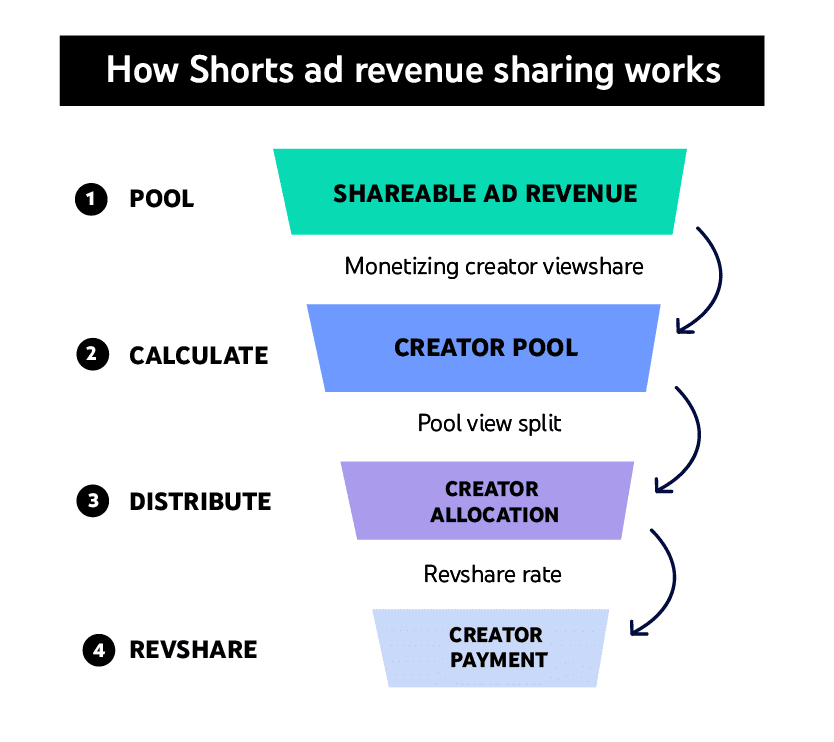
Image source: Google
This works for both short videos and regular YouTube content, making it safer for creators who want steady income.
#2 -  TikTok Ban Rumors/Reality
Rumors (and a quick reality) of a TikTok ban in the U.S. made many creators start posting on YouTube Shorts just in case. YouTube even let Shorts videos be 3 minutes long starting October 2024, copying TikTok’s style while giving creators more flexibility.
YouTube’s Big Advantages
#3 -  Built-in audience
Shorts get boosted by YouTube’s recommendations and trending lists, helping creators grow faster. TikTok doesn’t connect as well to other apps or longer videos.
#4 -  Different viewers
YouTube’s users are often older (25-34) vs. TikTok’s teen-heavy crowd, so creators can reach new fans.
#5 -  Creators Are Fed Up With TikTok
Many say TikTok’s rules change too often, and they’re tired of worrying about bans. YouTube feels more stable, especially with Google’s support for targeting the right audiences. The 3-minute Shorts also let them tell better stories without switching apps.
...And critically, most DTC & Direct Response advertisers are still under-leveraging YouTube Shorts as an ad placement.
(and the upside is huge)
So, what are some ways you can succeed with YouTube Shorts ads?
Let’s take a closer look at 2 YouTube Shorts ads doing well right now:
 Ad 1: Wisey (Productivity App, dopamine self-sabotage reframe)
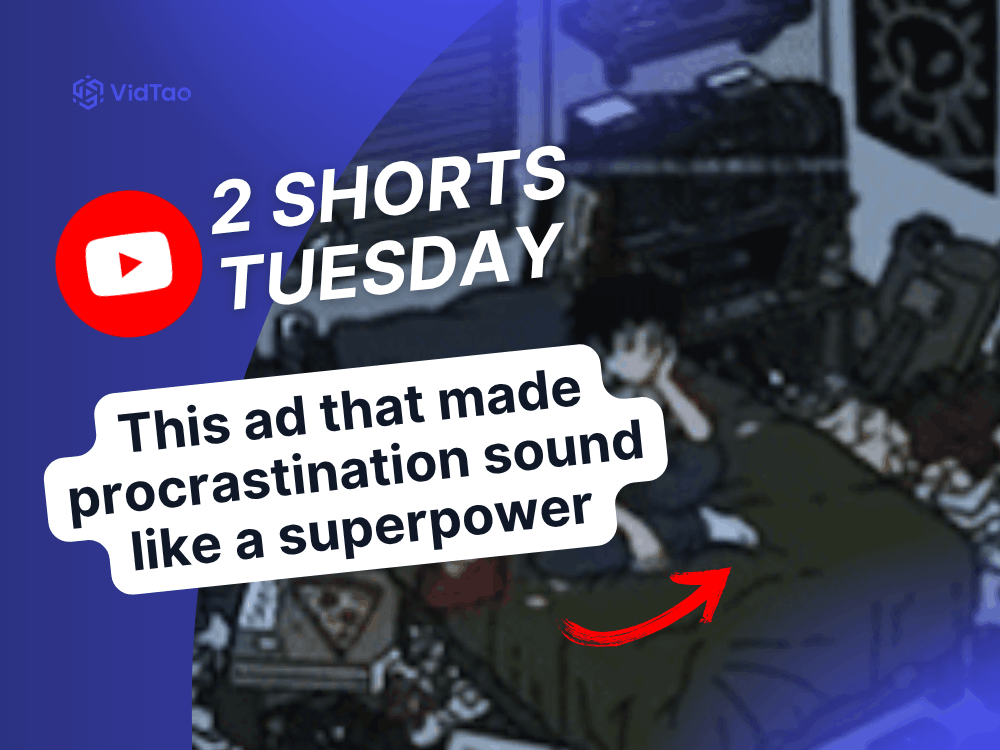
The first ad opens on an illustrated image: a young man lying in a messy bedroom surrounded by pizza boxes, screens, clutter. It looks like the inside of a procrastinator's mind made physical. The first line reads over it:
"He's not lazy. He's a smart man trapped in dopamine-driven self-sabotage."

Then it cuts to a podcast-style presenter: older man, glasses, grey hair, measured delivery - talking through the mechanism. A brain scan graphic appears on screen, split into two: one labelled "self-sabotage," the other showing the contrast. The presenter explains that the smarter the person, the better the self-sabotage hides. What looks like overthinking is actually the brain reaching for immediate relief - porn, scrolling, anything - when discomfort hits. It's not a willpower failure. It's a stress response. And discipline alone won't fix it.
The pivot: you don't need discipline, you need a system built specifically for your brain. One that catches the urge to escape and replaces it with one small step. Fifteen minutes a day. One week: first goal finished. Two weeks: healthy routines stick. One month: life completely changed. The ad closes on a CTA to take a quiz and discover your self-sabotage profile.
Why this ad works:
 The illustrated opening is doing more than stopping the scroll - it's showing the viewer themselves. A messy room, a guy lying down surrounded by the evidence of avoidance. It's not a dramatic scene, it's a familiar one. The viewer doesn't see a cautionary tale. They see their Saturday afternoon. And the text over it - "he's not lazy" - is a relief the viewer didn't know they were waiting for.
 "The smarter he is, the better it hides" is the most powerful line in the ad. It reframes the problem as something that scales with intelligence - which means everyone in the audience who considers themselves smart suddenly has a new explanation for why they keep failing despite knowing better. It's not a flaw. It's a feature of how high-IQ brains handle discomfort. That's not just compelling - it's genuinely relieving, and relief converts.
 The podcast presenter creates authority without credentials. No title card, no claimed expertise. But an older man in a blazer speaking calmly from a podcast studio, with brain scan graphics dropping behind him mid-speech, reads as someone who knows what he's talking about. The visual language of the format - podcast, brain imagery, measured delivery - transfers credibility by association.
 The mechanism explanation is the sell. Most productivity ads skip straight to features: habit tracker, goal setting, daily tasks. This one spends 40 seconds explaining why those things don't work before introducing the product. By the time the app appears, the viewer has been convinced that their previous attempts failed for a specific neurological reason. The product isn't an app - it's the thing built for brains like theirs.
 "Discover your self-sabotage profile" is a smarter quiz CTA than "take the quiz." It implies the quiz will reveal something specific and personal about how your version of self-sabotage works - not a generic score but a named pattern. That specificity raises the value of clicking considerably. You're not doing a quiz. You're getting a diagnosis.
Creative beats to swipe:
- Open with an illustration or image that shows the viewer's situation - not the ideal outcome, the current reality. Make them feel seen before you say a word.
- Lead with the reframe: "it's not X, it's Y." The bigger the relief the reframe provides, the harder the scroll-stop.
- Name the mechanism in scientific-sounding but plain English. "Dopamine-driven self-sabotage" is specific enough to feel real but accessible enough to understand instantly.
- Use the "smarter you are, the worse it gets" inversion - it flatters the audience while explaining their failure, which is a rare and powerful combination.
- Close the quiz CTA with what they'll discover, not just what they'll do. "Discover your X profile" beats "take the quiz."
Don’t miss out on other Shorts ads with millions in ad spend by the brand Wisey for some additional inspo:

Want to win a free year of VidTao ($797)?
Help us build VidTao 3.0 with your input by completing this 5-minute survey and you are entered to win a free year of VidTao ($797)!
 Ad 2: Chewy (Get Real Dog Food, UGC creator with a golden retriever)
Thirty-two seconds. One dog. One joke. One product. And it somehow does more persuasion work than ads four times its length.
The creator opens with: "Oatmeal acts like a human, so I feed him like one."

Oatmeal is the dog - a golden retriever who spends the ad swimming in a pool, eating from a bowl, and being handed packets of Get Real dog food with the same energy as a restaurant order arriving. The product is real human-grade food with no weird additives, fillers, or nonsense, used as a topper on kibble. The creator explains she always wanted to make Oatmeal homemade food but it's "above her skill level." Get Real is the next best thing - like a private chef delivering meals to your doorstep, vacuum sealed for freshness.
Then the kicker: "Real food gives Oatmeal real energy to advance his swimming career. He's hoping to make it to the dog Olympics. I haven't told him that's not a real thing yet."
Offer: 50% off your first order on Chewy's website.
Why this ad works:
 "Oatmeal acts like a human, so I feed him like one" is a perfect hook for the pet humanisation trend. A huge and growing segment of pet owners genuinely think of their animals as family members with preferences, personalities and needs. This line meets them exactly where they are - not with science or nutrition claims, but with a feeling they already have. The product rationale follows naturally from the identity the owner already holds.
 The dog Olympics joke earns the product claim by making it land softer. "Real food gives Oatmeal real energy to advance his swimming career" is a product benefit. "He's hoping to make it to the dog Olympics. I haven't told him that's not a real thing yet." is a joke that makes the viewer smile at exactly the moment the benefit lands. You remember the benefit because you laughed right after it. That's not accidental - humour is one of the most effective retention devices in short-form content, and this is a clean, quick execution of it.
 The "above my skill level" admission builds instant trust. She wanted to make homemade dog food but couldn't pull it off. That's an honest, relatable failure that positions the product as the sensible middle ground rather than an aspirational premium. It's not "the best food money can buy." It's "the best I can realistically do for my dog." That framing converts aspirational pet owners who have guilt about not doing more - which is most of them.
 "Like a private chef who delivers meals right to your doorstep" is a borrowed frame that elevates the product category. Human-grade, vacuum-sealed, delivered - applying private chef language to dog food repositions the entire category upward without making a single exaggerated claim. It's accurate. And it sounds like a treat the dog deserves and the owner can feel good about.
 Thirty-two seconds forces prioritisation - and this ad makes every second count. Hook, product explanation, benefit, joke, offer. Nothing wasted, nothing repeated. Short ads don't just test attention spans, they test the advertiser's ability to edit. This one passes.
Creative beats to swipe:
- Name the pet with a personality before naming the product. The pet-as-character hook works because viewers immediately project their own animal onto it.
- Anchor the product in a feeling the owner already has ("I want to feed him like a human") rather than a problem they're trying to solve.
- Use one honest admission of imperfection ("above my skill level") to position the product as the realistic best option, not the theoretical ideal.
- Land a benefit, then immediately follow it with a joke. The joke makes the benefit stick.
- Keep the offer dead simple. 50% off, one sentence, end of video. No stacking, no conditions.
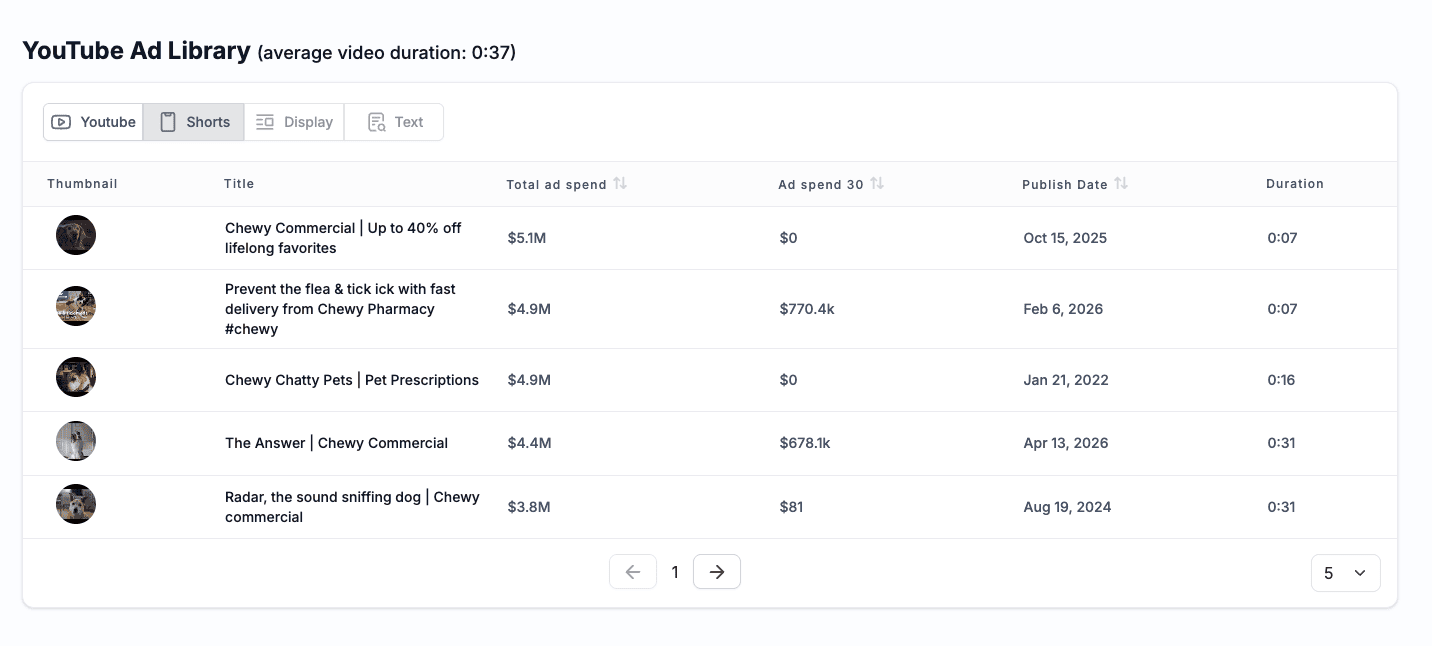
The brand Chewy also has many other high spenders that you don’t wanna miss out on! Here’s a sneak peek:
 "Spy" on 42M YouTube Ads
(plus Landing Pages)!
Unlock proven strategies for success with the VidTao Premium YouTube Ad Library. Get instant access to your FREE VidTao trial today 
 Claim Your FREE VidTao Trial Now!
Take the guesswork out of YouTube ads – start scaling smarter.
That's all for this week! 
We hope this week’s selection of high-performing YouTube Shorts ads has sparked new ideas to test yourself!
Want more insights like these?
Stay tuned for next week’s VidTao 2 Shorts Tuesday…
…where we’ll continue breaking down winning YouTube Shorts Ads you can break down + model for your own creatives & campaigns.
And btw… If you have questions about YouTube ads or YouTube Shorts ads in particular?
Go here to schedule a free chat with our friends at Inceptly. Inceptly is a top Direct Response video ad agency, specializing in high-performing YouTube ad creatives & media buying.
Have a great week!
PS - Go here to Claim Your Free Trial of VidTao Premium: Access 40 Million YouTube Ads & Their Landing Pages!
PPS - Are you spending $1k/day+ on Paid Ads?  Go here to set up a free YouTube Ad brainstorm chat.